Forests Act · Prohibited Area · Trinidad
Seasonal Beach Prohibited Areas
Seasonal Closure · Forests Act · Trinidad
1 March – 31 August annually
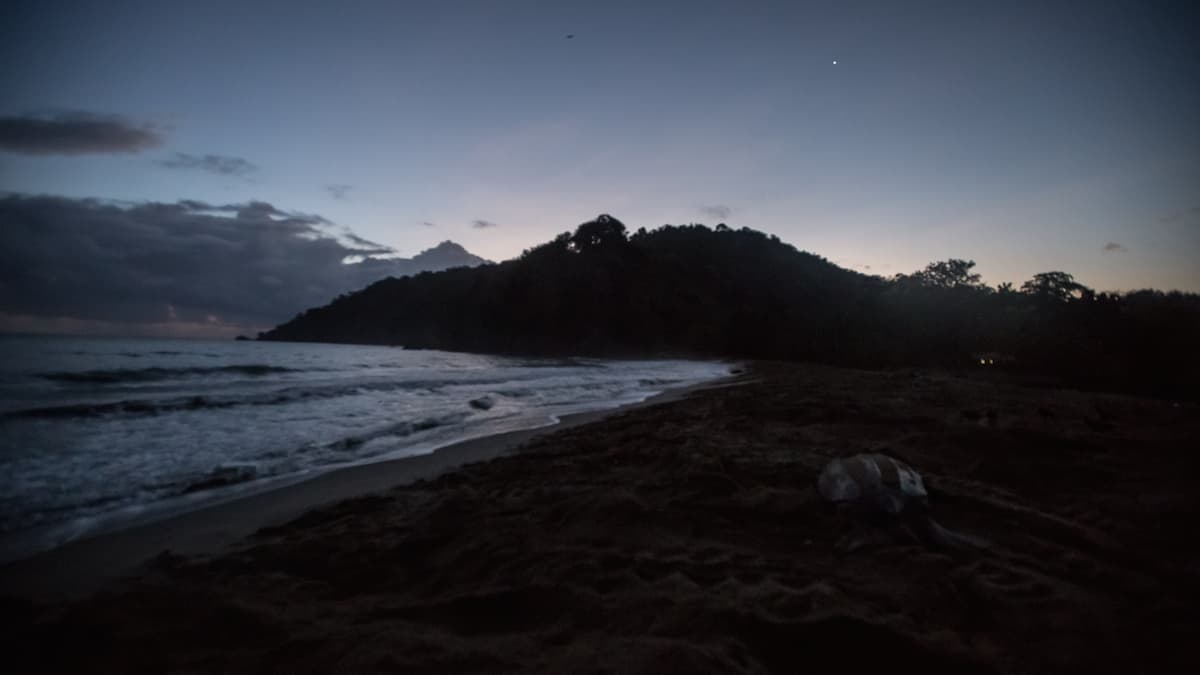
Photo: Jordan Beard · Grande Riviere, Trinidad (CC BY-SA 4.0)
Matura Beach, Fishing Pond Beach, and Grande Riviere Beach are prohibited areas each year from 1 March to 31 August, protecting nesting leatherback sea turtles at three of the Western Hemisphere's most significant nesting aggregations under the Forests (Prohibited Areas) Order.
The Forests (Prohibited Areas) Order designates three northeast Trinidad beaches as prohibited areas for the six-month leatherback nesting season. From 1 March to 31 August, entry onto Matura Beach, Fishing Pond Beach, and Grande Riviere Beach after dark without a Forestry Division authorisation is a criminal offence under the Forests Act, Chap. 66:01. The seasonal closure framework is enforced by the Forestry Division and its Wildlife Section, supplemented by community rangers embedded with local conservation NGOs. Day access remains permitted; the restrictions focus on nocturnal use, when nesting activity peaks and disturbance risk is highest.
Matura Beach, on the northeast Atlantic coast, is managed cooperatively by the Forestry Division and Nature Seekers, a community-based NGO established in 1990 that pioneered the shift from egg poaching to licensed eco-tourism at the site. The beach records some of the highest annual leatherback nest counts in the world, with seasonal totals consistently exceeding 5,000 nests and a documented peak of approximately 8,000 nests in strong seasons. Grande Riviere, a short black-sand beach in the far northeast, is managed by the Grande Riviere Nature Tour Guide Association (GRNTGA) and is renowned for one of the densest nesting concentrations on Earth: on peak nights, hundreds of females emerge simultaneously on a beach under 500 metres long. Fishing Pond Beach provides additional nesting habitat in the Manzanilla-Mayaro corridor and is subject to the same seasonal closure.
The prohibited area regime allows regulated, licensed turtle-watching tours to operate as the only permitted night-time activity on the beaches during the season, channelling conservation value into direct community livelihoods for villages that previously depended on egg collection. Guides must be licensed by the Forestry Division and are required to follow strict protocols: red-filtered lights only, minimum approach distances, no flash photography, and no interference with nesting females or hatchlings. The community co-management model at Matura and Grande Riviere has substantially reduced poaching rates since the involvement of local organisations.
Why This Matters
Trinidad and Tobago's seasonal beach protections exist for a reason that is both biologically precise and profoundly simple: sea turtles return to the exact beaches where they were born, and they do so at the same time every year, following cues encoded in their biology over millions of years of evolution. If a beach is degraded or disturbed during the nesting season, the turtles that arrive to lay their eggs cannot simply choose another beach. They will return to this one, and to find it inaccessible or unsafe is a direct failure of reproduction for a species that may not breed again for another two to three years. The restricted access periods are not an inconvenience; they are the mechanism by which a population of animals that have survived on this planet for 100 million years is given the conditions they need to continue.
The beaches of Trinidad's north and northeast coast host some of the most significant sea turtle nesting activity in the world. Matura Beach alone records over 5,000 leatherback nests per year; Grande Riviere is among the highest-density leatherback nesting beaches globally; hawksbills nest on beaches across Tobago. This concentration of nesting activity in a small national territory means that T&T carries a disproportionate share of regional and global responsibility for sea turtle conservation. The seasonal beach designations under the Forests Act are the legal framework that makes the protection concrete.
The transformation of T&T's turtle nesting beaches, from sites of widespread poaching in the mid-20th century to internationally recognised conservation success stories by the early 21st, is one of the most encouraging examples of what is possible when law, community engagement, and ecological understanding are combined. Nature Seekers at Matura, the Grande Riviere Tourism Action Committee, SOS Tobago: these organisations have demonstrated that protecting nesting beaches is not only ecologically essential but economically viable and community-strengthening. The seasonal beach protections are the legal foundation that makes all of it possible.
Legal Protections
This area is declared a prohibited area under the Forests Act, Chap. 66:01, or under an Order made pursuant to that Act. Entry, clearing, hunting, and resource extraction within its boundaries without State authorisation is a criminal offence. Penalties include fines and imprisonment. If you witness illegal activity within this area, report it immediately.
Report a ViolationCurrent Threats
- Egg poaching during and outside the prohibited period
- Coastal lighting disorienting hatchlings and deterring nesting females
- Beach erosion reducing available nesting habitat
- Climate change altering sand temperature and nest sex ratios
- Illegal night-time entry by unlicensed visitors
- Bycatch in nearshore fisheries on seasonal migratory corridors
Primary Sources & Legal Citations
- Forests (Prohibited Areas) Order, Chap. 66:01 · Subsection (11): Matura and Fishing Pond Beaches[GN 28/1990]
- Forests (Prohibited Areas) Order, Chap. 66:01 · Subsection (13): Grande Riviere Beach[GN 71/1997]
- Forests Act, Chap. 66:01 · Active prohibition period: 1 March – 31 August annually