Forests Act · Prohibited Area · Tobago
Main Ridge Forest Reserve
Historic Forest Reserve · Forests Act Chap. 66:01 · Tobago · gazetted 1776
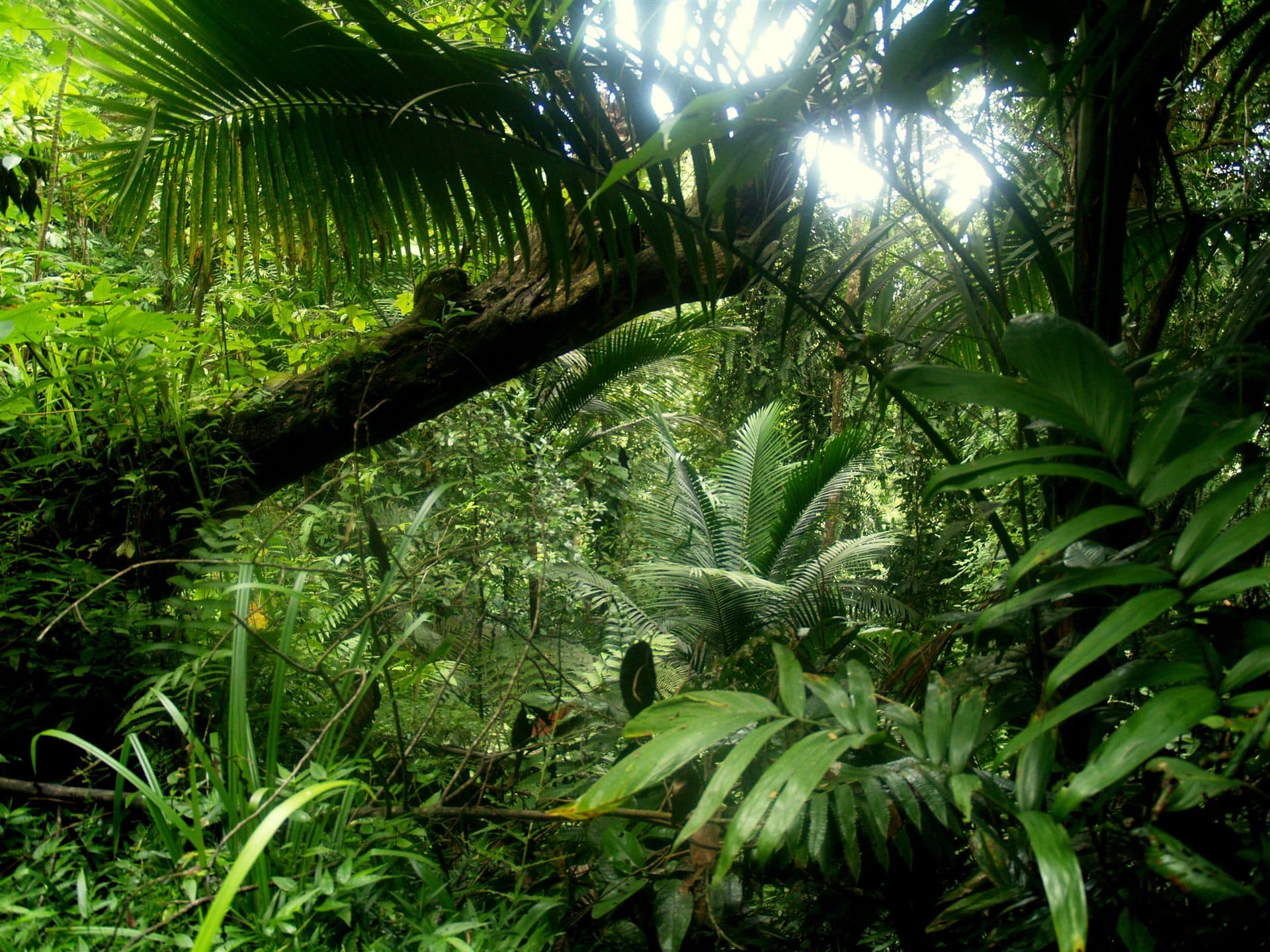
Photo: Aivar Ruukel · Main Ridge Forest Reserve, Tobago (CC BY-SA 2.0)
The Main Ridge Forest Reserve, gazetted on 13 April 1776 by an ordinance of the British colonial Parliament, is the oldest legally protected forest reserve in the Western Hemisphere and the ecological heart of Tobago. Covering approximately 3,958 hectares of lower-montane and lowland rainforest along Tobago's central ridge, the reserve protects the island's primary watershed, supports over 210 bird species including the endemic White-tailed Sabrewing, and forms the core of the North-East Tobago UNESCO Biosphere Reserve proclaimed in 2020.
The 1776 ordinance was prompted by English scientist Stephen Hales' research demonstrating the link between forests and rainfall, and championed before Parliament by Soame Jenyns, a Member responsible for trade and plantation affairs. The language of the proclamation was explicit: the forest was reserved "for the purpose of attracting frequent showers of rain upon which the fertility of lands in these climates doth entirely depend." This made the protection scientifically motivated rather than purely economic, a landmark in global conservation history, and what Scientific American later described as "the first act in the modern environmental movement." The reserve has been managed under successive colonial and post-independence forest legislation, culminating in its current recognition under the Forests Act, Chap. 66:01, with day-to-day oversight delegated to the Tobago House of Assembly's Division of Food Production, Forestry and Fisheries.
Ecologically, the Main Ridge supports exceptional biodiversity within its 3,958 hectares. More than 210 bird species have been recorded, including the globally near-threatened White-tailed Sabrewing, a hummingbird endemic to Tobago and Venezuela. At least 15 endemic vascular plant species are found here, among them Duguetia tobagensis and Justicia tobagensis, while the reserve's reptile fauna includes the Ocellated gecko, found nowhere else on Earth. Three amphibian endemics are known from the ridge: the Bloody Bay poison frog, the Charlotteville rain frog, and Turpin's frog. The reserve is a globally recognised Important Bird Area (IBA) and Key Biodiversity Area (KBA). In 2020, UNESCO's Man and the Biosphere Programme designated the North-East Tobago Biosphere Reserve, with Main Ridge as the core zone, the largest MAB site in the English-speaking Caribbean Small Island Developing States. Trinidad and Tobago has also submitted the reserve to the UNESCO World Heritage tentative list (2011), though inscription has not yet occurred.
Despite 250 years of legal protection, the reserve faces mounting pressure. Subsistence and commercial hunting of game species including agouti, wild hog, and armadillo persists within and around the reserve boundary. Illegal logging and agricultural encroachment erode the margins, while the Gilpin Trace, the reserve's most-used visitor trail, receives intensifying ecotourism pressure that has required supplementary trail construction to distribute foot traffic. Climate change poses a structural threat: altered rainfall patterns undermine the very hydrological rationale that prompted the 1776 proclamation, and increased dry-season drought raises fire vulnerability across a ridge that has never experienced serious wildfire management regimes. The reserve's modest size relative to the biodiversity it contains makes every loss of habitat or connectivity disproportionately significant.
Why This Matters
The Main Ridge Forest Reserve in Tobago is the oldest legally protected forest in the Western Hemisphere, gazetted on 13 April 1776. That date predates Tobago's incorporation into the British Empire; it reflects a decision made by the Tobago Legislature more than 250 years ago that the forested ridge running down the spine of the island was too valuable to clear. The primary motivation was rainfall: the legislature understood that the forests of the Main Ridge captured moisture from the northeast trade winds and fed the rivers that supplied Tobago's communities and plantations. The ecological reasoning was correct then and remains correct now. The Main Ridge is still Tobago's primary freshwater catchment.
The ecological value of the Main Ridge has only become clearer over time. This is the sole significant habitat of the White-tailed Sabrewing Hummingbird, a near-endemic found almost nowhere else on Earth, which pollinates the flowering plants of the montane forest interior in ways that no other species can replicate. The reserve's 3,958 hectares also shelter an extraordinary diversity of Tobago's forest fauna, from the blue-backed manakin to the Trinidad motmot to the red squirrel, within a landscape that has been under legal protection for so long that its old-growth character is effectively unique in the Caribbean. Adjacent to the northeast Tobago UNESCO Man and the Biosphere Reserve, the Main Ridge anchors the entire ecological integrity of Tobago's north.
There is something instructive about a forest that has been protected for 250 years: it still exists. The evidence for the value of long-term legal protection is written in the forest itself. Maintaining the Main Ridge's Prohibited Area status under the Forests Act, enforcing its boundaries against agricultural encroachment and logging, and investing in the ranger capacity that makes enforcement real, is the continuation of a commitment that started in 1776. It is worth honouring.
Legal Protections
This area is declared a prohibited area under the Forests Act, Chap. 66:01, or under an Order made pursuant to that Act. Entry, clearing, hunting, and resource extraction within its boundaries without State authorisation is a criminal offence. Penalties include fines and imprisonment. If you witness illegal activity within this area, report it immediately.
Report a ViolationCurrent Threats
- Subsistence and commercial hunting within and adjacent to the reserve
- Illegal logging and agricultural encroachment at reserve margins
- Climate change altering rainfall and increasing dry-season fire risk
- Ecotourism pressure on key trails, particularly Gilpin Trace
- Small reserve size amplifying the impact of every boundary loss
Primary Sources & Legal Citations
- Forests Act, Chap. 66:01 · Forest Reserve designation
- National Forest Policy 2011 · §1.2.3.1: gazetted 13 April 1776; oldest legally protected forest in the Western Hemisphere
- UNESCO Man and the Biosphere Programme · North-East Tobago Biosphere Reserve[Designated October 2020; inaugurated June 2022]
- UNESCO World Heritage Tentative List · Tobago Main Ridge Forest Reserve[Submitted 2011 (not yet inscribed)]