Forests Act · Prohibited Area · Trinidad
Long Stretch Forest Reserve
Prohibited Area · Forests Act · Trinidad
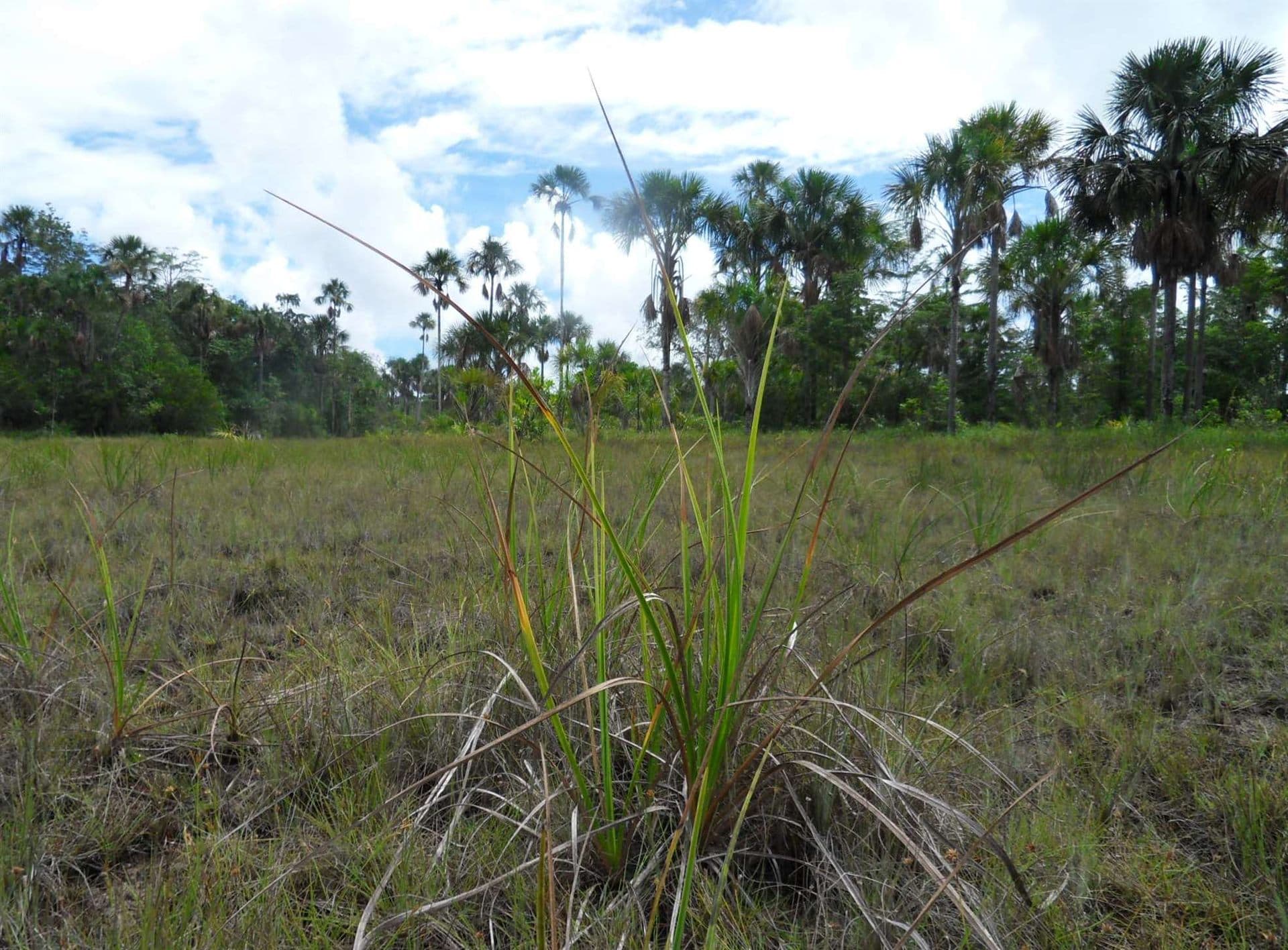
Photo: Bakanae · Aripo Savannas, Trinidad (CC BY-SA 3.0)
The Long Stretch Forest Reserve, proclaimed in January 1934 under the Forest Ordinance Chapter 141 of 1916, is a state forest reserve in east-central Trinidad managed by the Forestry Division. A specified portion of the reserve was later declared a prohibited area under the Forests (Prohibited Areas) Order, providing a strict access-control layer over the land. That protected portion encompasses the Aripo Savannas, the largest remaining natural savanna ecosystem in Trinidad and Tobago, a globally rare edaphic savanna shaped by a shallow impervious clay hardpan rather than by climate.
The Long Stretch Forest Reserve sits in east-central Trinidad at the foot of the Northern Range, spanning a landscape that transitions from closed-canopy tropical forest into an unusual mosaic of open savanna, palm marsh, marsh forest, and intermittent open water. The reserve forms part of the Cumuto-Arena conservancy corridor and contains upper catchment lands that contribute to freshwater supply for communities downstream. A 1935 Forestry Division management plan originally contemplated controlled timber harvesting within the reserve, but between 1940 and 1956 some 1,660 hectares of the savanna zone and adjacent lands were leased to the United States Armed Forces for the establishment of Fort Read, leaving a legacy of bunkers, drainage channels, and roadways still visible today.
The prohibited-area portion of the Long Stretch Forest Reserve protects what is now formally recognised as the Aripo Savannas Environmentally Sensitive Area (declared ESA in 2007), covering approximately 1,788 hectares. The savanna's character is determined by a hardpan clay layer that simultaneously waterlogged soils during the wet season and induces drought stress in the dry season, suppressing tree growth and maintaining open grassland. Six distinct vegetation communities have been mapped: open savanna, palm marsh, marsh forest, palm island, intermittent open water, and trackside. The iconic Moriche Palm occurs here in groves found nowhere else in the Caribbean archipelago. Surveys have recorded approximately 457 species within the reserve, including at least two strict endemics, the sedge Rhynchospora aripoensis and the yellow-eyed grass Xyris grisebachii, alongside more than 250 bird species, red brocket deer, armadillo, porcupine, and the rare scarlet-shouldered parakeet.
The prohibited-area designation under the Forests Act goes beyond the protections attached to an ordinary forest reserve: entry is permitted only by permit issued by the Forestry Division, and every permit carries mandatory conditions governing movement, research, and any removal of materials. This framework was applied to the Long Stretch portion in 1987, at the same time the Aripo Savannas were proposed as a scientific reserve, in direct response to escalating pressure from illegal quarrying, agricultural squatting, and uncontrolled fires. Despite decades of statutory protection, encroachment continues to erode the reserve's margins each year, and enforcement capacity remains constrained.
Why This Matters
The Long Stretch Forest Reserve is one of the less celebrated but ecologically essential components of the conservation landscape in north-central Trinidad. Its significance lies not only in what it contains, but in where it sits: directly adjacent to the Aripo Savannas ESA, serving as a forested buffer that protects the savanna's hydrological and ecological integrity from the development pressure expanding outward from the Sangre Grande corridor. The reserve, proclaimed as a Forest Reserve in January 1934 and declared a Prohibited Area in 1987, has been part of T&T's protected area system for nearly a century.
Within and adjacent to Long Stretch are habitats connected to the Aripo Savannas that support some of the most endangered plant life in the Caribbean. The two plant species found nowhere else on Earth, Rhynchospora aripoensis and Xyris grisebachii, are associated with the edaphic savanna landscape that Long Stretch helps protect from encroachment. The reserve also provides forest cover along the Valencia River drainage, maintaining water quality and bank stability in a catchment that serves communities in northeast Trinidad. The Elmina Clarke-Allen Highway, which now passes near the savanna's edge, has increased pressure on the buffer zone that Long Stretch represents.
A forest reserve that has been continuously protected for nearly 90 years is a living demonstration that legal protection works when it is consistently applied. Long Stretch's value as a buffer and watershed forest is not dramatic or photogenic; it does its work quietly, through root systems holding hillside soil, canopy intercepting rain, and shade maintaining the moisture conditions that the Aripo Savannas' unique flora requires. That quiet, essential work deserves the same protection and enforcement as the more celebrated ecosystems around it.
Legal Protections
This area is declared a prohibited area under the Forests Act, Chap. 66:01, or under an Order made pursuant to that Act. Entry, clearing, hunting, and resource extraction within its boundaries without State authorisation is a criminal offence. Penalties include fines and imprisonment. If you witness illegal activity within this area, report it immediately.
Report a ViolationCurrent Threats
- Agricultural and residential squatting encroaching on reserve boundaries
- Uncontrolled fires set by squatters spreading into savanna habitat
- Illegal quarrying for sand, soil, and gravel destroying vegetation
- Poaching of wildlife and extraction of protected plant species
- Inadequate enforcement capacity limiting deterrence of prohibited-area breaches
Primary Sources & Legal Citations
- Forests (Prohibited Areas) Order, Chap. 66:01 · Subsection (8)[GN 113/1987 (effective 15 June 1987)]
- Forest Ordinance, Chap. 141 (1916) · Original Forest Reserve proclamation, January 1934
- Environmental Management Act, Chap. 35:05 · ESA Rules (GN 64/2001)[Aripo Savannas ESA designated June 2007]