Shrubs & Herbs
Ginger Thomas
Tecoma stans
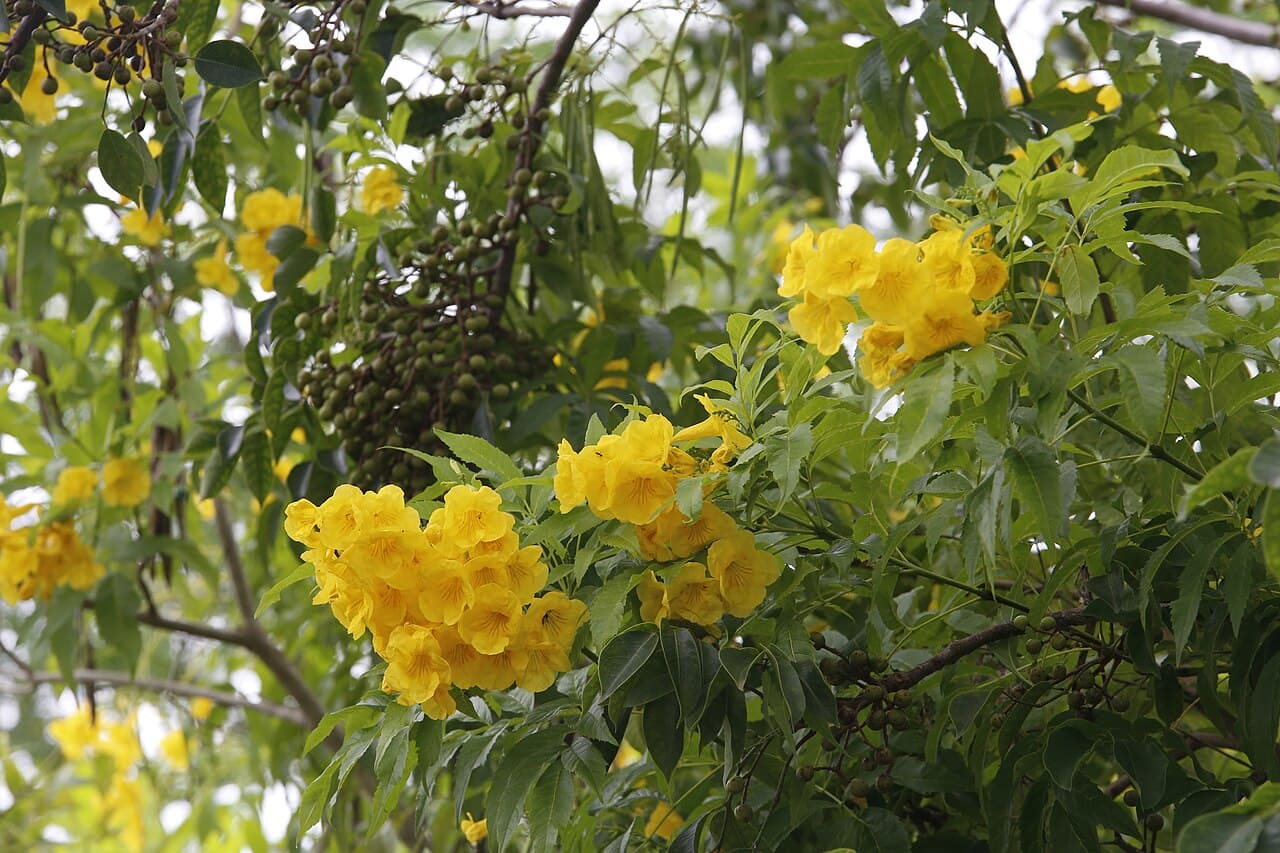
Photo: Wikimedia Commons contributor (CC BY-SA 2.0)
Ginger Thomas is one of the most familiar flowering shrubs in Trinidad and Tobago, its clusters of bright yellow, trumpet-shaped flowers a constant presence along roadsides, in gardens, and at forest edges across both islands. Fast-growing and drought-tolerant, it thrives in the degraded and disturbed habitats of both urban and rural areas, providing nectar for butterflies, hummingbirds, and bees year-round. It is the national flower of the United States Virgin Islands and has a long tradition of medicinal use across the Caribbean.
Description
A fast-growing, semi-woody shrub to small tree typically 2 to 6 metres tall, with multiple stems from the base and a loose, spreading habit. Bark is pale grey and slightly fissured on older stems. Leaves are pinnately compound with 5 to 13 toothed, lanceolate to elliptic leaflets, bright green and slightly aromatic when crushed. Flowers are bright yellow (occasionally with orange stripes in the throat), tubular to bell-shaped, about 3 to 5 cm long, produced in terminal clusters throughout the year with peaks during and after the rainy season. Fruit is a long, slender, pod-like capsule 10 to 20 cm long, splitting to release many papery-winged seeds.
Ecology
Ginger Thomas is a pioneer and secondary-vegetation species, thriving in disturbed ground, roadsides, abandoned fields, dry scrub, and forest edges. It tolerates poor, rocky, and shallow soils and is drought-hardy once established. The abundant nectar-rich flowers attract a wide range of pollinators including Monarch butterflies, many bee species, and hummingbirds including the Copper-rumped Hummingbird. It is one of the most reliable year-round nectar sources for urban wildlife in T&T. The plant reproduces prolifically by wind-dispersed seed and can become locally dominant in disturbed areas.
Traditional Medicine
Ginger Thomas has a long history of use in Caribbean traditional medicine. Leaves and bark are boiled to prepare teas used for diabetes, digestive complaints, respiratory conditions, and skin problems. In T&T the plant is widely known as a remedy for diabetes and hypertension. Several studies have investigated the pharmacological basis for these uses, finding compounds with anti-hyperglycaemic and anti-inflammatory activity in laboratory conditions, though clinical evidence remains limited. The common name "ginger thomas" is used in T&T and the Eastern Caribbean; elsewhere in the region the plant is known as yellow elder or yellow bells.
Threats
- Generally secure; common and widespread in disturbed habitats
- Potential displacement in natural habitats by more aggressive invasive shrubs