
Shrubs & Herbs
Fever Grass
Cymbopogon citratus
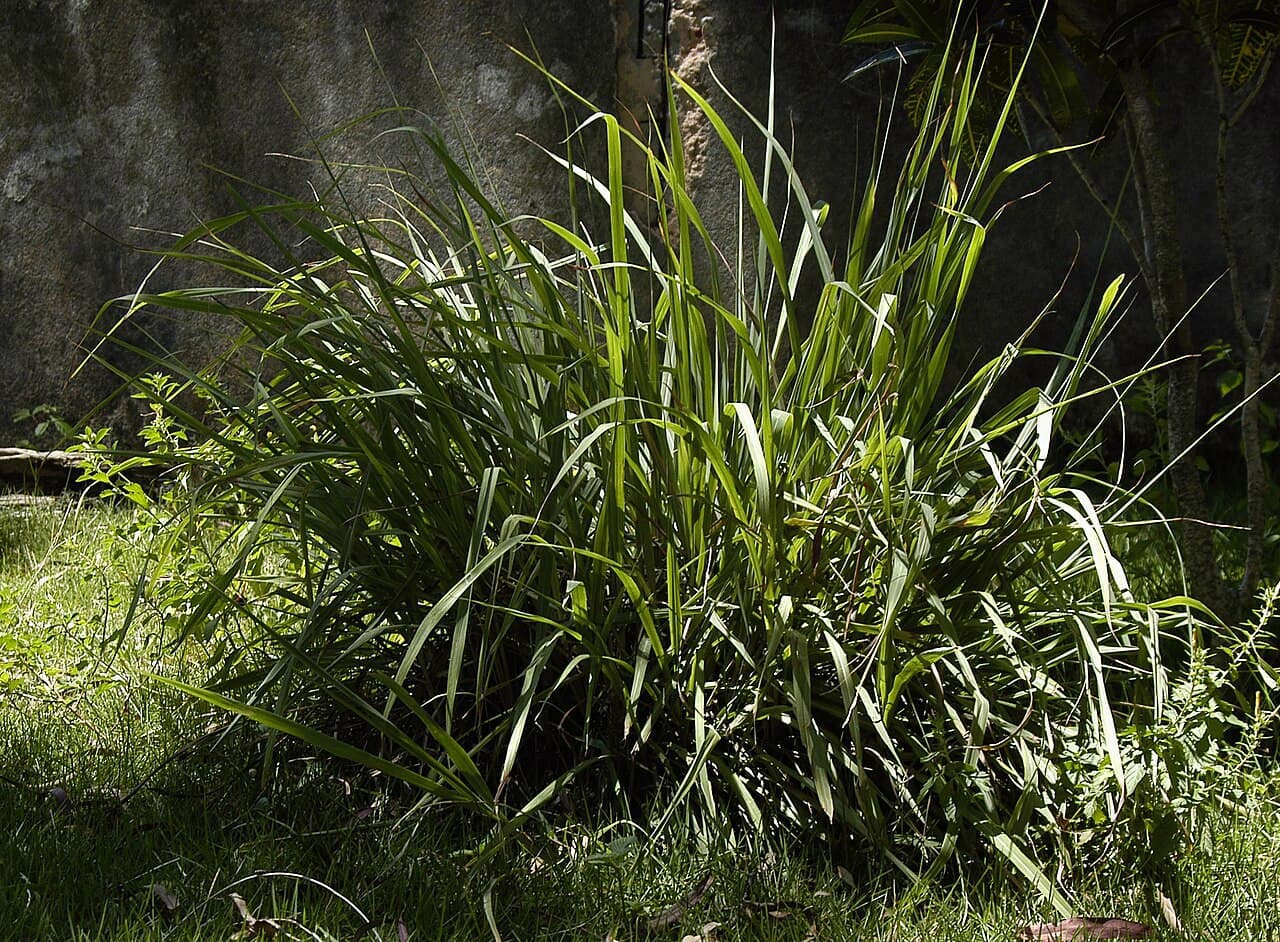
Photo: Wikimedia Commons contributor (CC BY-SA 3.0)
Fever Grass - known worldwide as lemongrass - is one of the most ubiquitous and beloved medicinal and culinary herbs in Trinidad and Tobago, found in virtually every household garden and used daily in cooking, herbal teas, and traditional medicine. Its clean, lemony fragrance, produced by citral-rich essential oils in the long, arching grass blades, is one of the defining scents of the Trinidadian kitchen. The plant is deeply embedded in the tradition of bush medicine: a strong tea of fever grass is the most common first remedy for colds, fever, and digestive complaints in T&T.
Description
A densely clump-forming perennial grass growing 1 to 2 metres tall, with long, arching, blue-green leaf blades 1 to 2 cm wide and up to 90 cm long that taper to a fine point. The leaf bases are thick, pale, and fleshy; when cut, a strong lemon fragrance is released immediately. The stem base is fibrous. Fever Grass rarely flowers outside of tropical Asia; in T&T it is propagated entirely by dividing clumps. The plant forms large, expanding clumps over time and is extremely robust, tolerating poor soils, drought, and neglect.
Culinary and Medicinal Use
In T&T cooking, fever grass leaves are used to flavour rice, soups, callaloo, and stews; the white stem base is used in Thai-influenced and Caribbean fusion dishes. As a bush medicine, the leaves are boiled to make a strong tea taken for fever (hence the local name), colds, flu, stomach cramps, headaches, and as a general tonic. The tea is considered safe and is given to children. Citral, the primary essential oil component, has documented antimicrobial, anti-inflammatory, and antifungal properties. The oil is also used in mosquito repellent formulations.
Cultural Role
Fever Grass is inseparable from the culture of home gardening and bush medicine in T&T. Knowledge of its uses is passed down across generations and it is one of the herbs most consistently mentioned in accounts of Trinidadian and Tobagonian folk medicine. Bundles of fresh fever grass are sold at markets throughout the country. It is also grown commercially for essential oil extraction. The plant is believed to have arrived in the Caribbean through the trade networks of the colonial era, originally from tropical Asia, but is now fully naturalised in the local plant and food culture.
Threats
- No conservation concern; common in cultivation and naturalised on roadsides