Trees
Courbaril
Hymenaea courbaril
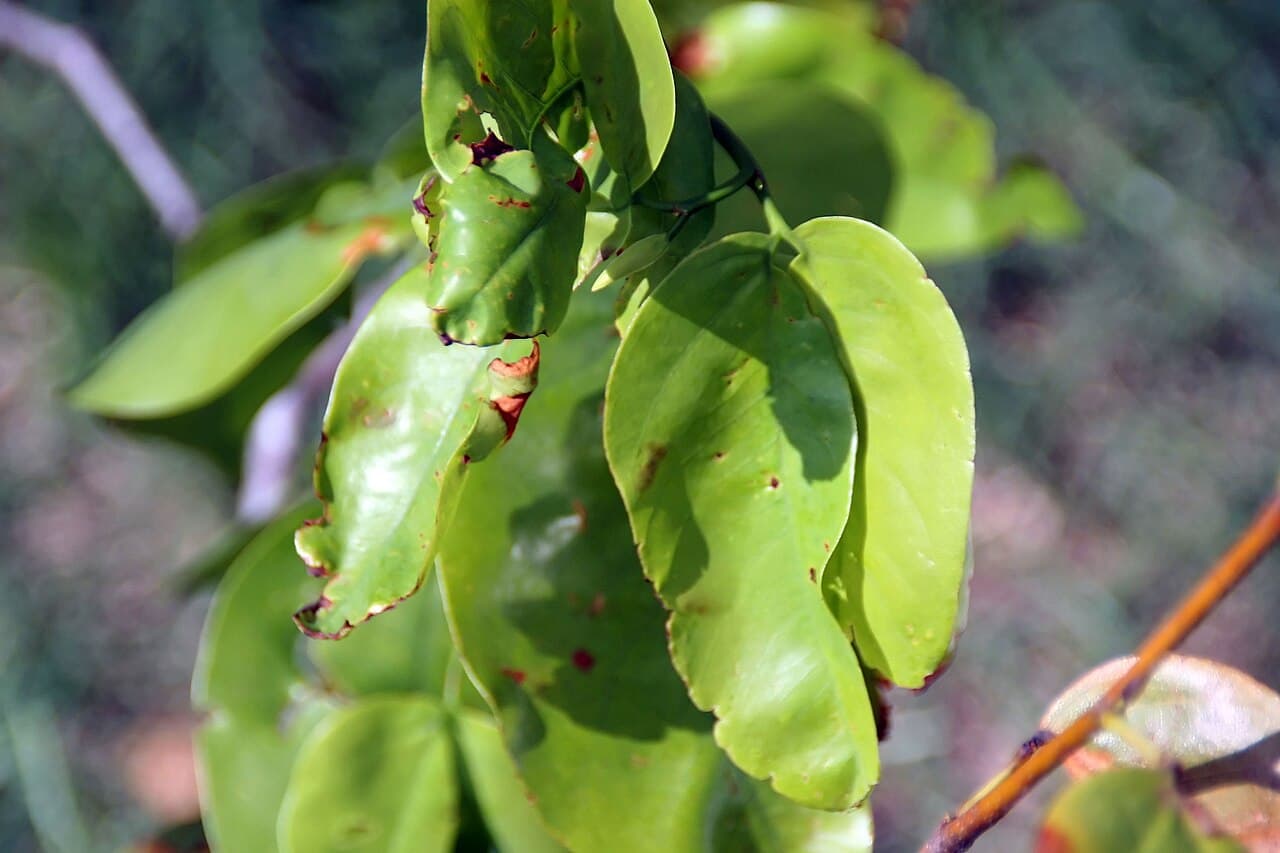
Photo: David J. Stang (CC BY-SA 4.0)
Courbaril, known locally as locust, is one of the largest and most ecologically important trees of Trinidad's rainforests, a towering legume with a massive buttressed trunk and some of the hardest, most durable timber in the Caribbean. Its large pods encase seeds in a dry, floury pulp that has been eaten by humans and animals for centuries, and the aromatic resin from its bark - copal - was historically collected for incense and varnish. Old-growth courbaril trees are keystone features of lowland forest, their hollows sheltering wildlife and their heavy pods providing food for large mammals.
Description
A massive, slow-growing evergreen tree reaching 30 to 45 metres tall with a trunk diameter sometimes exceeding 2 metres at the base. Large, plank buttresses extend several metres from the base of the trunk. Bark is grey-brown and scaly. Leaves are compound, with two leaflets per leaf stalk - a distinctive and immediately identifiable feature. Flowers are small, white to pale cream, fragrant, produced in clusters; they open at night and are pollinated by bats. Pods are large (7 to 15 cm), woody, and indehiscent, containing 2 to 4 seeds embedded in a dry, chalky white pulp.
Ecology
Courbaril is a canopy dominant in lowland and lower-montane rainforest in Trinidad. Its bat-pollinated flowers make it part of the nocturnal pollination network that also supports fig trees and other forest giants. The large, heavy pods fall intact and are cracked open by agoutis and pacas, which scatter-hoard the seeds; some are never retrieved and germinate. Older hollow trunks shelter bats, opossums, and tree porcupines. The deep buttress roots stabilise the tree in shallow rainforest soils and create microhabitat at their base for small ferns, mosses, and invertebrates.
Uses
Courbaril timber, called jatoba in Brazil and locust in the Caribbean, is among the hardest commercially available hardwoods. It has been used for heavy construction, tool handles, flooring, and boat building. The powdery pod pulp is edible and was historically consumed mixed with water or ground into flour; it has a pleasant, slightly sweet, floury taste. The amber resin (copal) exuded from wounds in the bark was collected in colonial times for varnish, incense, and medicinal preparations. Old-growth specimens are now largely confined to protected Forest Reserves.
Threats
- Illegal felling for high-value timber
- Slow regeneration
- Loss of bat pollinators