Palms
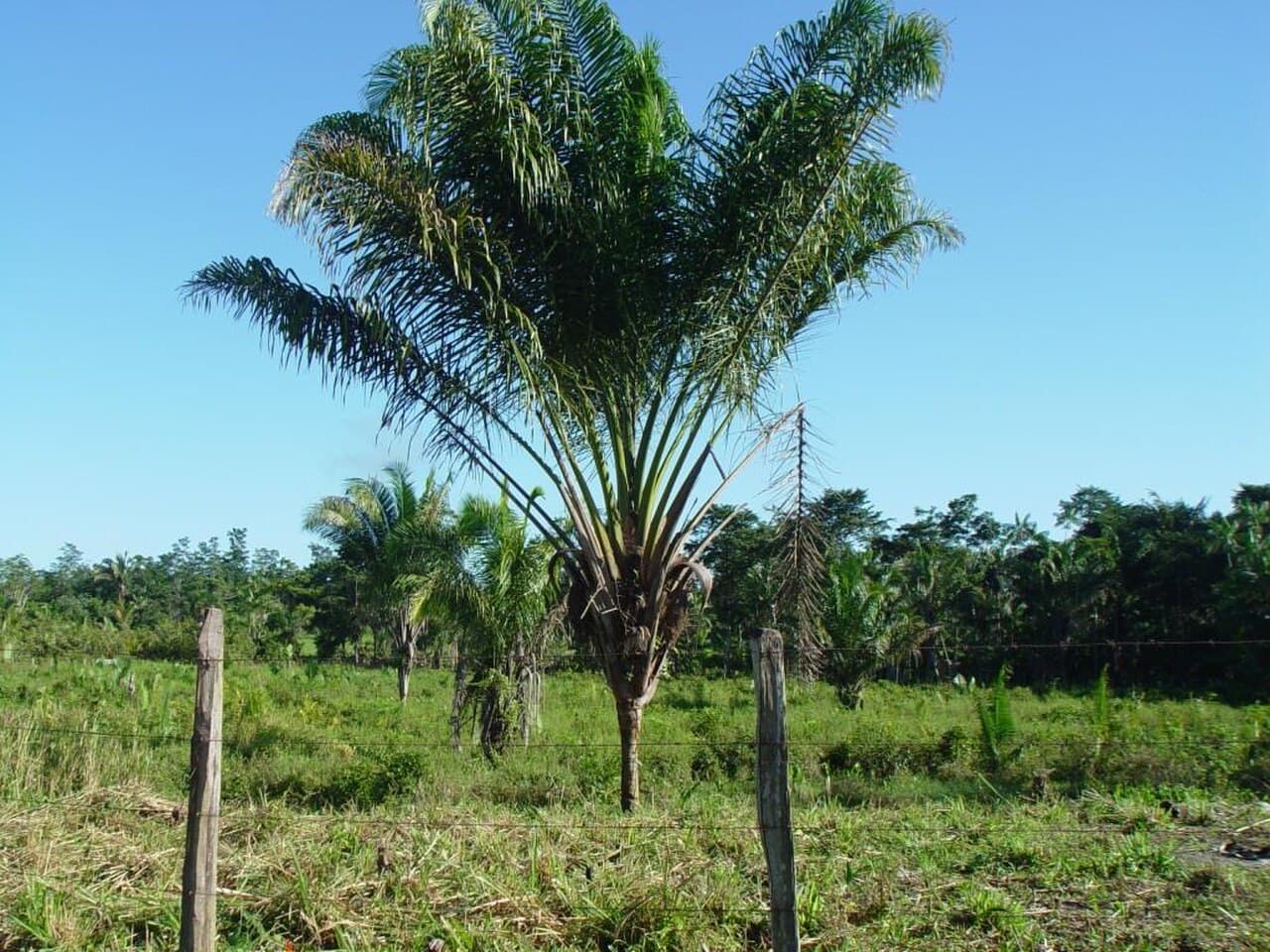
Cocorite Palm
Attalea maripa
Photo: Wikimedia Commons contributor (CC BY-SA 4.0)
The Cocorite is one of Trinidad's most ecologically important native palms, a tall, solitary canopy palm whose dense clusters of orange-red fruits are a cornerstone food source for some of the island's most celebrated wildlife. Macaws, parrots, toucans, monkeys, and agoutis all rely on its fruits, making it a keystone species in the lowland forests and forest-savanna transitions where it grows.
Description
A tall, solitary palm reaching 20 to 25 metres, with a stout, upright trunk marked by the scars of fallen fronds. The crown carries 15 to 20 large, arching, pinnate fronds, each up to 10 metres long with numerous narrow leaflets. The trunk base is often surrounded by persistent dead frond bases. Flowers are produced in large, branched inflorescences partially enclosed in a woody spathe. Fruits are oval, 4 to 6 cm long, produced in massive dense clusters of hundreds of fruits; they ripen to orange-red and contain a thin, oily, orange flesh over a hard, woody endocarp enclosing one to three seeds.
Ecological Role
The Cocorite is a keystone fruiting species in Trinidad's lowland ecosystems. The fruit clusters are consumed by Blue and Gold Macaws, Orange-winged and other parrots, Channel-billed Toucans, Red Howler and White-fronted Capuchin monkeys, Red-rumped Agoutis, and Lowland Pacas. Agoutis and pacas cache the hard seeds, acting as dispersers. The oil-rich fruit is an important energy resource, particularly during dry-season periods when other fruit sources are scarce. The crown provides nesting and roosting sites for parrots and other cavity-nesting birds. Cocorite stands in forest clearings are often indicators of wildlife-rich habitat.
Uses
The fruit pulp yields a reddish-orange oil used traditionally in cooking and as a hair and skin treatment. The seeds (corozo nuts) are very hard and have been carved into buttons and small objects. The large fronds are used for thatch and basket-weaving. The growing tip (heart of palm) is edible but harvesting it kills the tree, so this use is discouraged. Cocorite oil has potential as a commercial product but has not been developed at scale in T&T.
Threats
- Forest clearance removing stands in lowland areas
- Decline of seed-dispersing wildlife (macaws, large mammals) reduces natural regeneration