Trees
Cacao
Theobroma cacao
Photo: Wikimedia Commons contributor (CC BY-SA 4.0)
Cacao is a small understorey tree of deep historical and economic significance in Trinidad and Tobago. Introduced from the Americas centuries ago and cultivated extensively during the colonial era, Trinidad Fine Cocoa became internationally renowned for its complex flavour and commanded premium prices on world markets. Today, heritage cacao cultivation survives in pockets of the Northern Range and across Tobago, and a revival movement centred on single-estate fine cocoa has rekindled global interest in T&T as a source of exceptional chocolate.
Description
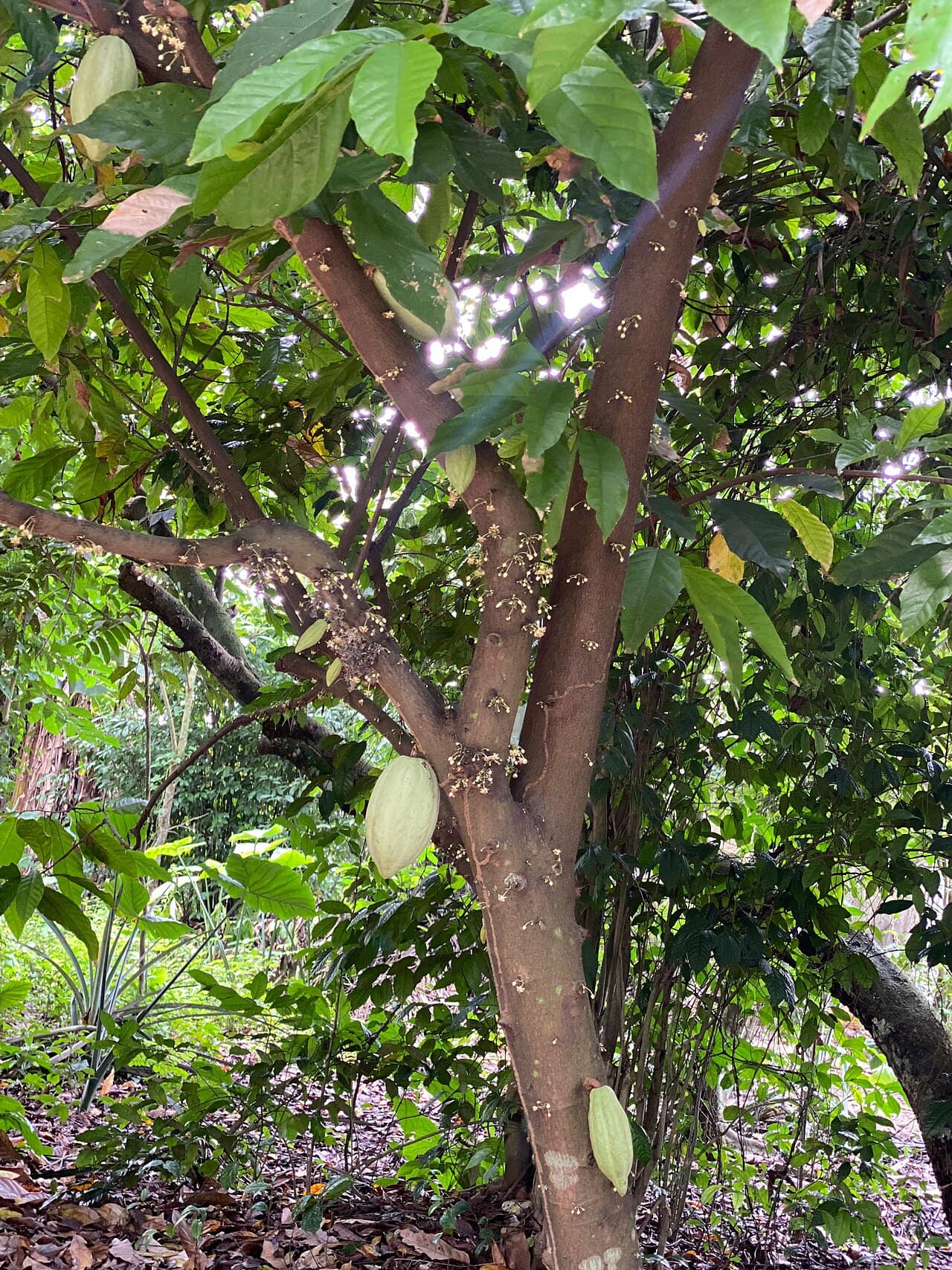
A small, spreading evergreen tree typically 4 to 8 metres tall under cultivation, taller in the wild understorey. Bark is brown and smooth to slightly fissured. A distinctive and peculiar feature is cauliflory: small, pale pink to white flowers and, subsequently, large oval pods emerge directly from the trunk and main branches rather than from the tips of shoots. Pods are 15 to 30 cm long, deeply ridged, and turn yellow, orange, or red when ripe. Each pod contains 20 to 50 seeds (cacao beans) embedded in sweet white pulp.
History in T&T
Cacao cultivation in Trinidad dates to Spanish colonial settlement, with large-scale plantation development in the 18th and 19th centuries. The Trinitario hybrid, developed in Trinidad from a cross between the fine-flavour Criollo and robust Forastero varieties, became one of the world's most important cacao types and is the genetic basis for much of T&T's surviving heritage stock. By the late 19th century Trinidad was one of the world's largest cacao producers. The industry declined through the 20th century but a craft-chocolate revival since the 2010s has repositioned T&T Fine Cocoa as a premium agricultural product.
Ecology
Cacao grows naturally in the humid understorey of lowland tropical forest, requiring shade, consistent moisture, and warm temperatures. In plantation settings it is typically grown under shade trees such as Bois Immortelle, which fixes nitrogen and moderates temperature. The flowers are pollinated by midges (tiny flies); the large pods are dispersed by mammals including squirrels and agoutis, which eat the sweet pulp and scatter the seeds. Traditional cacao estates support significant shade-tree canopy and are recognised as semi-wild habitat with good biodiversity value.
Threats
- Witches broom and frosty pod rot fungal diseases
- Abandonment of heritage estates
- Loss of Trinitario genetic diversity
- Northern Range urbanisation