Shrubs & Herbs
Bois Bande
Richeria grandis
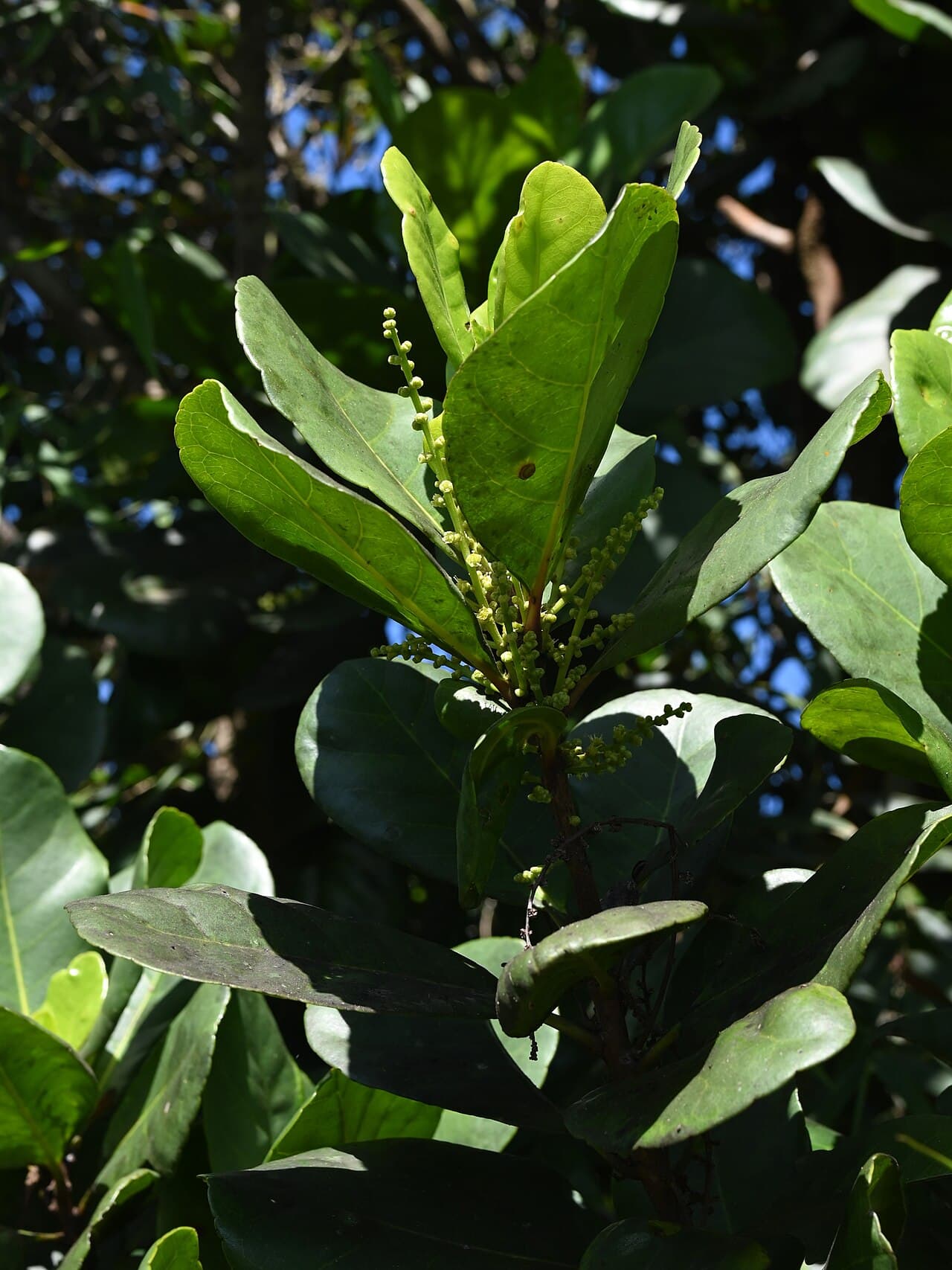
Photo: Krzysztof Ziarnek (Kenraiz) · Guadeloupe (CC BY-SA 4.0)
Bois Bande is one of the most culturally embedded plants in Trinidad and Tobago's folk tradition: a slender understorey tree of montane forest whose red-tinted bark has been used for centuries as a tonic and traditional medicine, most famously as an aphrodisiac and general fortifier. The name "bois bande" (literally "wood bound" or "stiffened wood" in French Creole) alludes to its traditional reputation, and bark preparations remain widely sold in markets and rum shops across T&T as a popular herbal drink and tonic, often steeped in rum.
Description
A slender to medium-sized understorey tree growing 5 to 15 metres tall, characteristically found in montane and cloud-forest conditions in the Northern Range. The most immediately distinctive feature is the bark: smooth, with a reddish-brown to orange-red inner layer visible where the outer bark has peeled or been stripped. Leaves are simple, elliptic to oblong, glossy dark green, and clustered toward the tips of branches. Flowers are very small and inconspicuous, greenish-white, produced in axillary clusters. Fruits are small capsules.
Traditional Use and Cultural Status
Bark of Bois Bande is stripped, dried, and steeped in rum, water, or other liquids to produce a tonic widely consumed across T&T. The drink is sold in bars and markets and is particularly associated with male vitality and physical strength. Beyond its aphrodisiac reputation, bark preparations are used for fatigue, arthritis, and as a general tonic. The plant is deeply embedded in Trinidadian folk culture and is a point of national pride; the name itself has entered common speech as a byword for vigour. Demand for the bark has led to significant harvesting pressure on natural populations.
Ecology and Conservation
Richeria grandis grows in the mid to upper Northern Range in conditions of high rainfall, humidity, and relatively cool temperatures. It is an understorey specialist, tolerating the deep shade of closed canopy montane forest. The sustained demand for bark and the relatively restricted range of montane forest in T&T has raised concerns about harvesting pressure; the species is not formally protected but is considered at risk from over-harvesting in accessible forest. Cultivation as an alternative to wild harvest has been discussed but not widely implemented.
Threats
- Over-harvesting of bark from wild trees to meet commercial demand
- Loss of montane forest habitat through agricultural encroachment on the Northern Range
- No formal legal protection despite harvesting pressure