
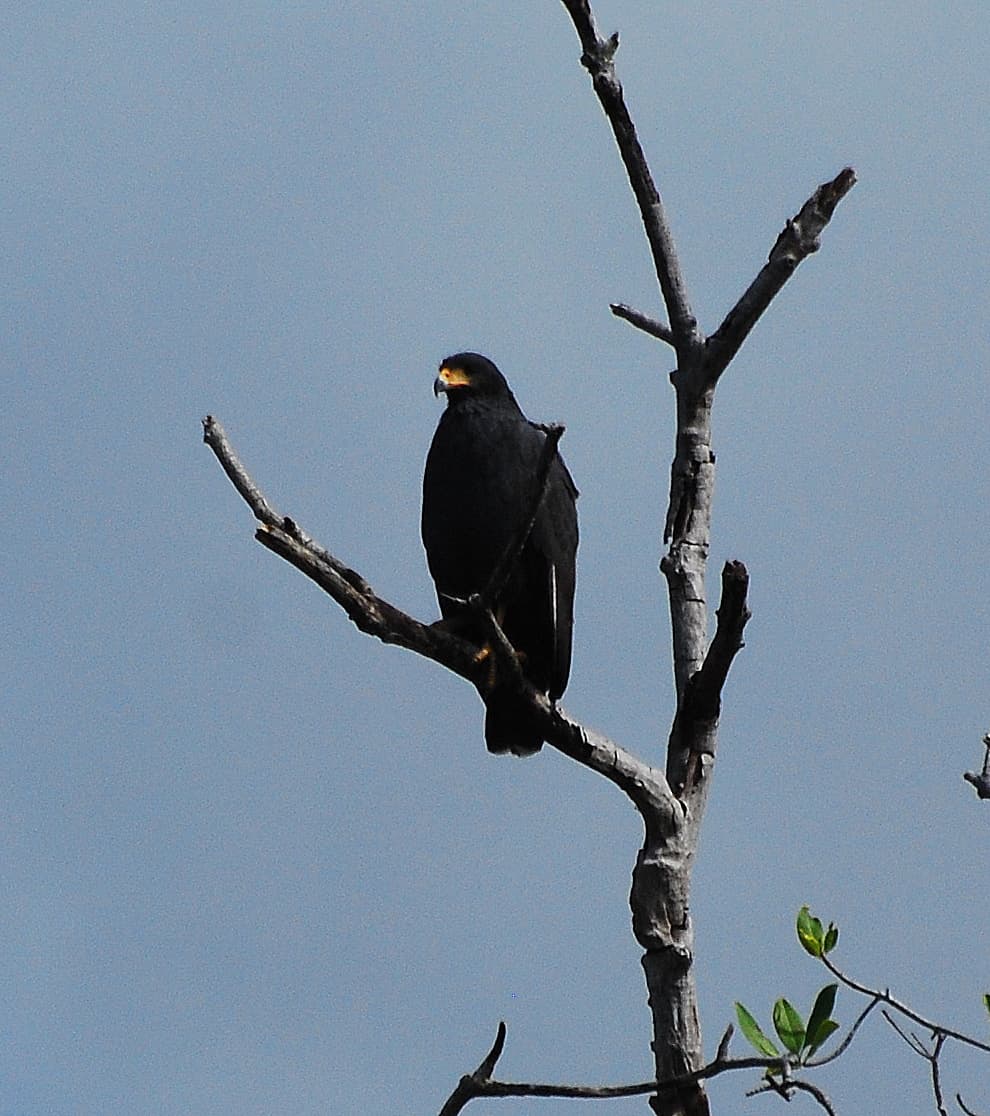
Bird
Common Black Hawk
Buteogallus anthracinus
Common black hawks are a medium-sized raptor. Adults are typically black with a greyish - brown hue, the tail is short and black with a broad white band and a white tail tip. They have a yellow hooked beak with a black tip, a pair of short, strong legs with excellent grip and a long wing span (twice the body length). They have brown eyes and the cere (the fleshy covering at the top of the beak), l
Description
Common black hawks are a medium-sized raptor. Adults are typically black with a greyish - brown hue, the tail is short and black with a broad white band and a white tail tip. They have a yellow hooked beak with a black tip, a pair of short, strong legs with excellent grip and a long wing span (twice the body length). They have brown eyes and the cere (the fleshy covering at the top of the beak), legs and facial skin is bright orange-yellow. Juveniles are dark brown above with spots and streaks, white or cream below with dark blotches and have a black and white barred tail. Breeding season may occur as early as January. The male courts the female using various displays, once the female shows interest he swoops in and mounts her. Both males and females takes part in building the nest which is built 15 - 100 feet above ground in trees usually mangrove. These nest are reused and tend to grow bigger each season. Females lay 1 - 3 greyish-white eggs with small specks and blotches, these eggs have a granular surface. Incubation period is 38-39 days and done mainly by the female. The female usually remains at the nest with the chicks while the male hunts and provides food. Chicks leave the nest after 6-7 weeks and can fly well at 10 weeks and at 2 months they stop begging for food and are able to find food for themselves. Common black hawks dwell in the coastal regions including marshy swamps and dry woodland areas and sometimes maybe spotted sitting on the ground. Common black hawks are solitary and diurnal birds.
Fun Facts
Common black hawks have exceptional vision, three or more times, more powerful than that of humans and can locate prey from a distance of 100 feet. Common black hawks are creative hunters. In shallow water, they may wade in and flutter their wings to startled fish and other prey. Then they use the wings to "herd" prey into shallow water, where it is easier to capture.