Reptile
Collared Snake (Ring-Neck Snake)
Ninia atrata
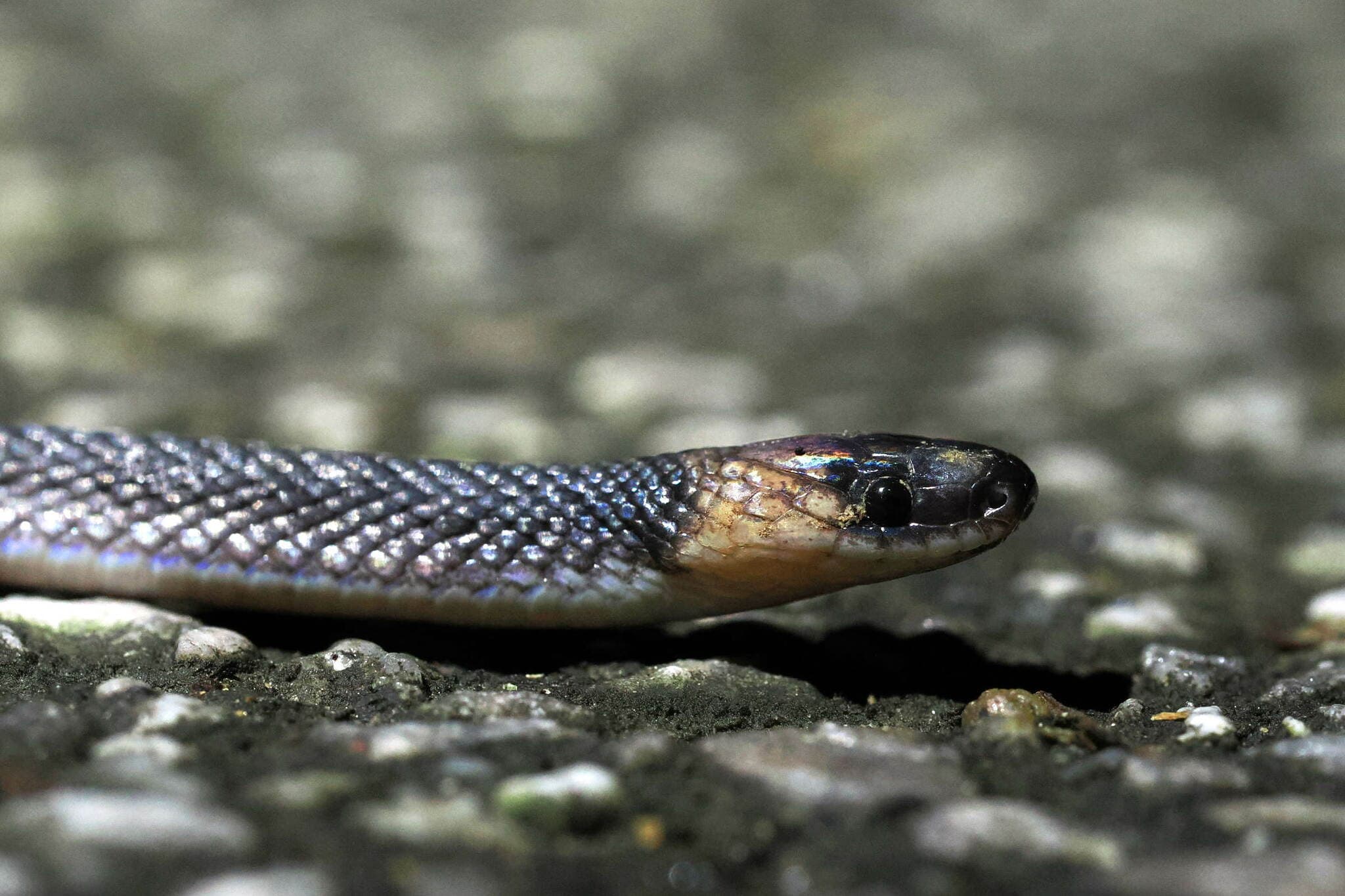
The Collared Snake is a small, distinctively marked colubrid found on both Trinidad and Tobago. Named for the pale collar that separates its dark head from its dark body, it is a secretive species of moist forest floor and humid gardens, feeding on slugs and soft-bodied invertebrates. One of the smallest and most inoffensive snakes in T&T, it is completely harmless and fully protected by law.
Description
Ninia atrata is a small, moderately slender snake reaching approximately 25 to 40 cm. The body is dark reddish-brown to nearly black above; the belly is pale or whitish; and the most distinctive feature is the pale yellow, cream, or orange collar immediately behind the head, which stands out clearly against the dark neck and cap. This collar is consistent across the species and makes it identifiable even to a non-specialist. The scales are smooth.
Ecology
The genus Ninia is a Dipsadinae specialist in molluscivory: the Collared Snake feeds primarily on slugs, with earthworms and soft-bodied invertebrates also taken. The mobile lower jaw elements are somewhat specialised for handling soft, slippery prey. When handled or threatened, the snake will writhe and may release cloacal musk, a common defensive strategy in small colubrids that depends on being unpleasant rather than dangerous. It does not bite effectively.
Conservation
Found in moist, shaded environments on both Trinidad and Tobago, the Collared Snake inhabits forest floor leaf litter, under rotting logs, in garden compost, and in humid secondary growth. It is most often found in areas with high moisture and abundant leaf litter that supports its slug prey base. In gardens it is entirely beneficial, reducing slug populations that would otherwise damage plants. Fully protected under the Conservation of Wildlife Act.
Threats
- Habitat loss and soil disturbance
- Decline of leaf litter in deforested areas
- Reduction of slug prey base in dry or degraded habitats