
Bird
Channel-billed Toucan
Ramphastos vitellinus
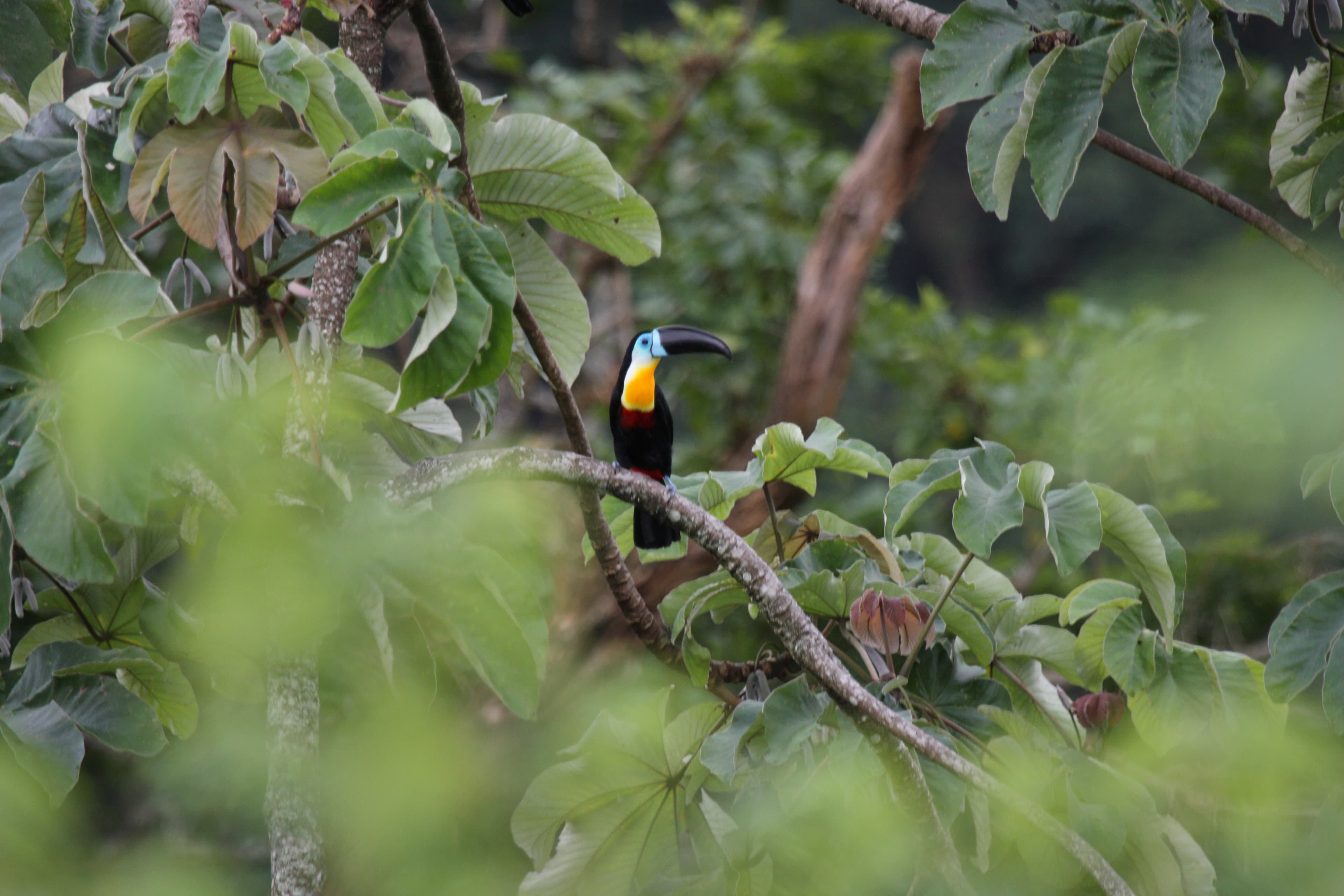
The channel-billed toucan gets its name from the deep channel-like groove located on either side of the bill. Adults are black with red plumage below the tail and on its breast. It has golden yellow feathers on its throat which is surrounded by white feathers. The skin around its eye is coloured pale blue as well as the base of the bill. Their bills helps the bird to regulate its body temperature
Description
The channel-billed toucan gets its name from the deep channel-like groove located on either side of the bill. Adults are black with red plumage below the tail and on its breast. It has golden yellow feathers on its throat which is surrounded by white feathers. The skin around its eye is coloured pale blue as well as the base of the bill. Their bills helps the bird to regulate its body temperature and is also used to attract mates. They have a huge bill that takes up about one-third of the length of its body, despite the beaks large appearance, their beaks are light and hollow. Channel-billed toucans makes calls that sounds like shrieks, they are high-pitched and loud. The bill has tiny serrations called tomial teeth that contains a long, narrow feather-like tongue that helps them to taste food. Although they spend alot of time on trees, they are not very good at flying, they travel mainly by hopping through trees.
Fun Facts
Channel-billed toucan beaks are made of keratin like human hair and fingernails. The toucan is actually a relative of the woodpecker.