
Fish
Cascadura
Hoplosternum littorale
The Cascadura is an armoured catfish woven into the folklore and cuisine of Trinidad. A Trinidadian saying holds that those who eat the Cascadura will, no matter how far they wander, return to Trinidad to end their days. Beyond legend, this air-breathing, mud-burrowing fish is a genuine ecological specialist of swamps and flooded grasslands.
Identification
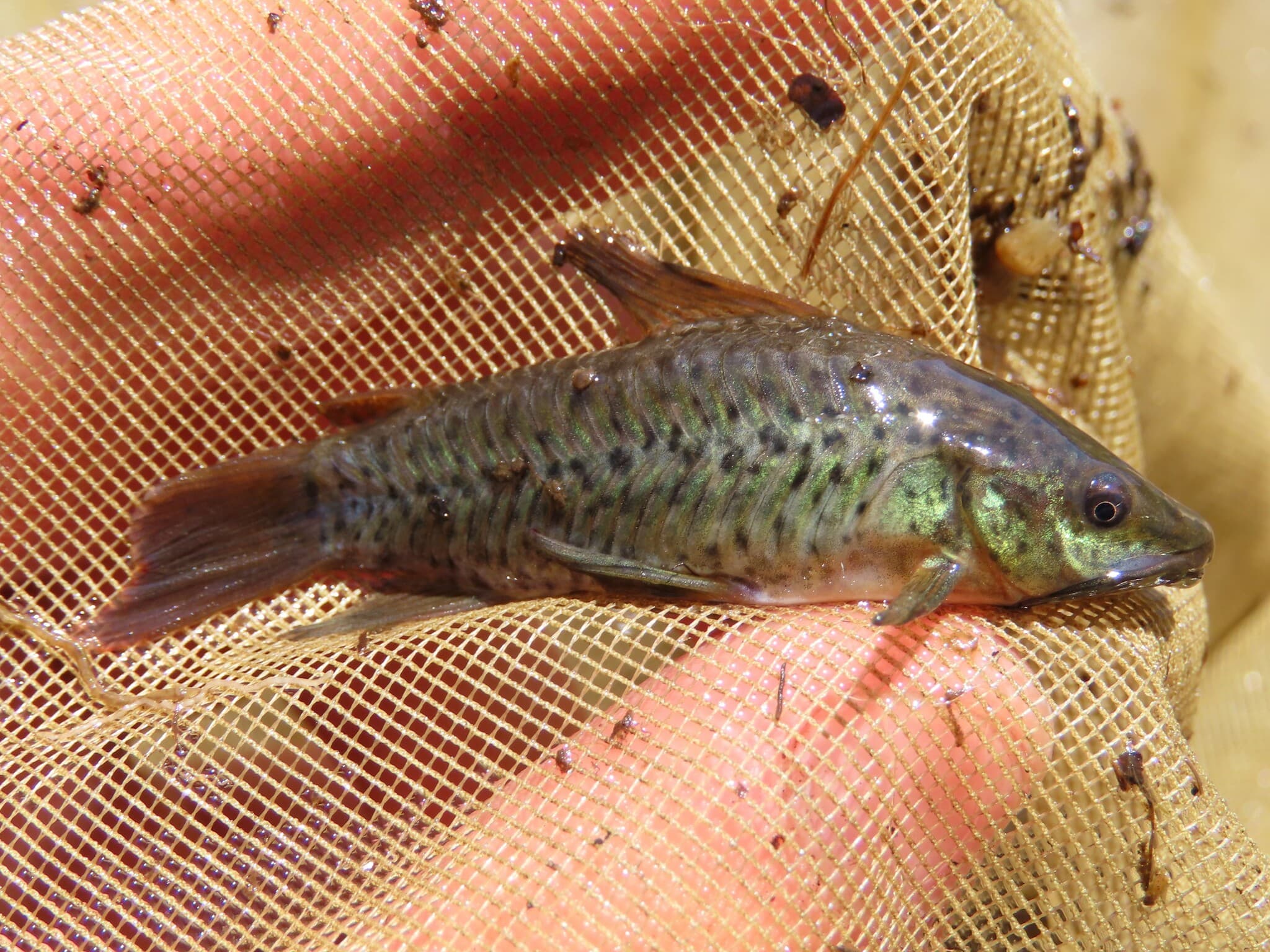
A robust, bottom-dwelling catfish with an elongated body covered in two rows of bony, overlapping plates (scutes) rather than ordinary scales. Adults reach 15 to 25 cm in length. The belly is pale; the back and sides are dark brown to olive, often with faint mottling. Two pairs of barbels flank the downward-facing mouth. The pectoral spines are stout and can lock rigidly, a defence against predators.
Ecology and Adaptations
The Cascadura is an obligate air-breather: it has a modified section of intestine that absorbs atmospheric oxygen, allowing it to survive in the oxygen-depleted, stagnant water of swamps and flooded rice fields where most fish would suffocate. During dry-season droughts, it can burrow into moist mud and aestivate for weeks. This resilience makes it one of the commonest large fish across Trinidad's freshwater wetlands.
Cultural Significance
The Cascadura has a unique place in Trinidadian culture. Curried cascadura is a traditional dish, particularly popular in rural communities near Nariva Swamp, the Caroni plains, and rice-farming areas of central Trinidad. The species also features in regional literature, most notably in Samuel Selvon's work and in the Trinidadian proverb that is now practically a national saying.
Fisheries and Conservation
The Cascadura supports small-scale artisanal fisheries in central and south Trinidad. It is not currently considered threatened, but habitat loss through drainage of freshwater wetlands, conversion of swamp land, and pollution from agricultural chemicals are long-term pressures. Protection of Nariva Swamp as an Environmentally Sensitive Area indirectly conserves the core of its habitat.
Threats
- Drainage and conversion of freshwater wetlands for agriculture and development
- Pesticide and herbicide runoff from rice cultivation and sugar cane farming
- Over-harvesting during dry season when fish concentrate in shrinking pools