
Bird
Bananaquit
Coereba flaveola
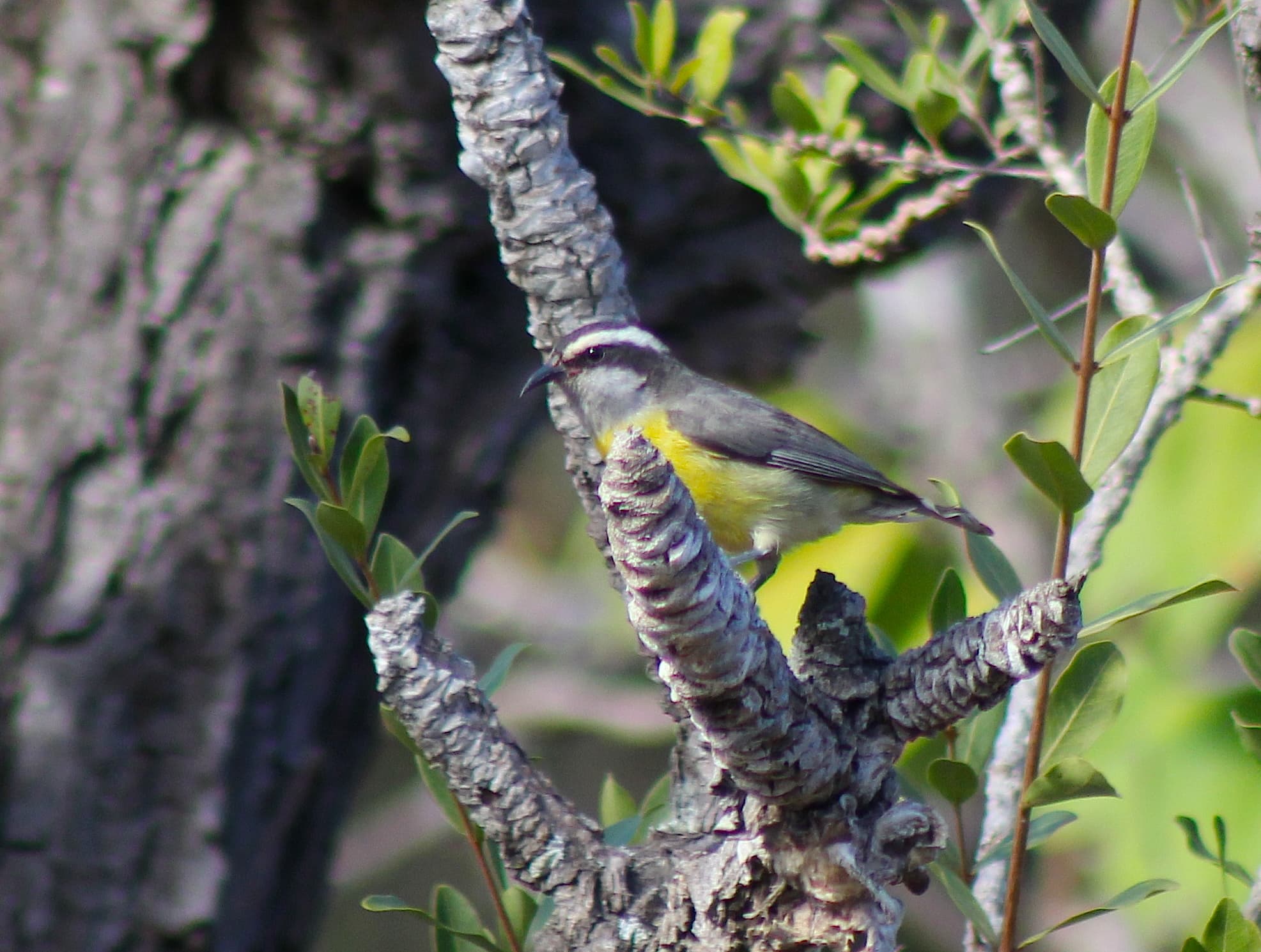
The bananaquit is a very small bird and is popular for their distinctive appearance and behavior and is also known as sugar bird. The feathers on the head and back wings are dark gray and the rump and belly is bright yellow. The throat is a lighter shade of gray and the tail feathers are tipped white. They have a prominent white eyestripe extending from the nostril to the nape. They have a slender
Description
The bananaquit is a very small bird and is popular for their distinctive appearance and behavior and is also known as sugar bird. The feathers on the head and back wings are dark gray and the rump and belly is bright yellow. The throat is a lighter shade of gray and the tail feathers are tipped white. They have a prominent white eyestripe extending from the nostril to the nape. They have a slender black bill that is curved downwards. Their feet and legs are gray with three toes pointing foward and one backward, they also have long sharp claws that help provide a firm grip when feeding and perching. Juveniles are similar in appearance but are duller in colour. Like most bird species the Bananaquit has a preen gland on its back at the base of the tail. This gland produces a mixture of waxes and oils that the bird uses to coat its feathers. This coating keeps the feathers flexible, resilient and water resistant and provides some protection against parasites and bacteria. Bananaquit breed year round with the female laying several clutches throughout the year. Males court females without acting defensively toward other males. Courtship rituals includes bowing, bobbing and vocalizations. They build two nest during breeding season, one not so well constructed and used to roost and the other almost three times larger and compact using leaves, grasses and plant fibers which takes the pair 5 - 7 days to construct. Females lay 2 - 3 white eggs with brown spots and incubate them for about 12 - 14 days. Hatchlings are born naked with pink bodies and their eyes are closed, they are completely dependent on both parents. At 4 - 5 days their eyes open and feathers begin to develop, at 14 days they are entirely covered in feathers. Juveniles leave the nest at 15 - 18 days old. Bananaquits are social, solitary and diurnal birds.