Marine Mammal
West Indian Manatee
Trichechus manatus
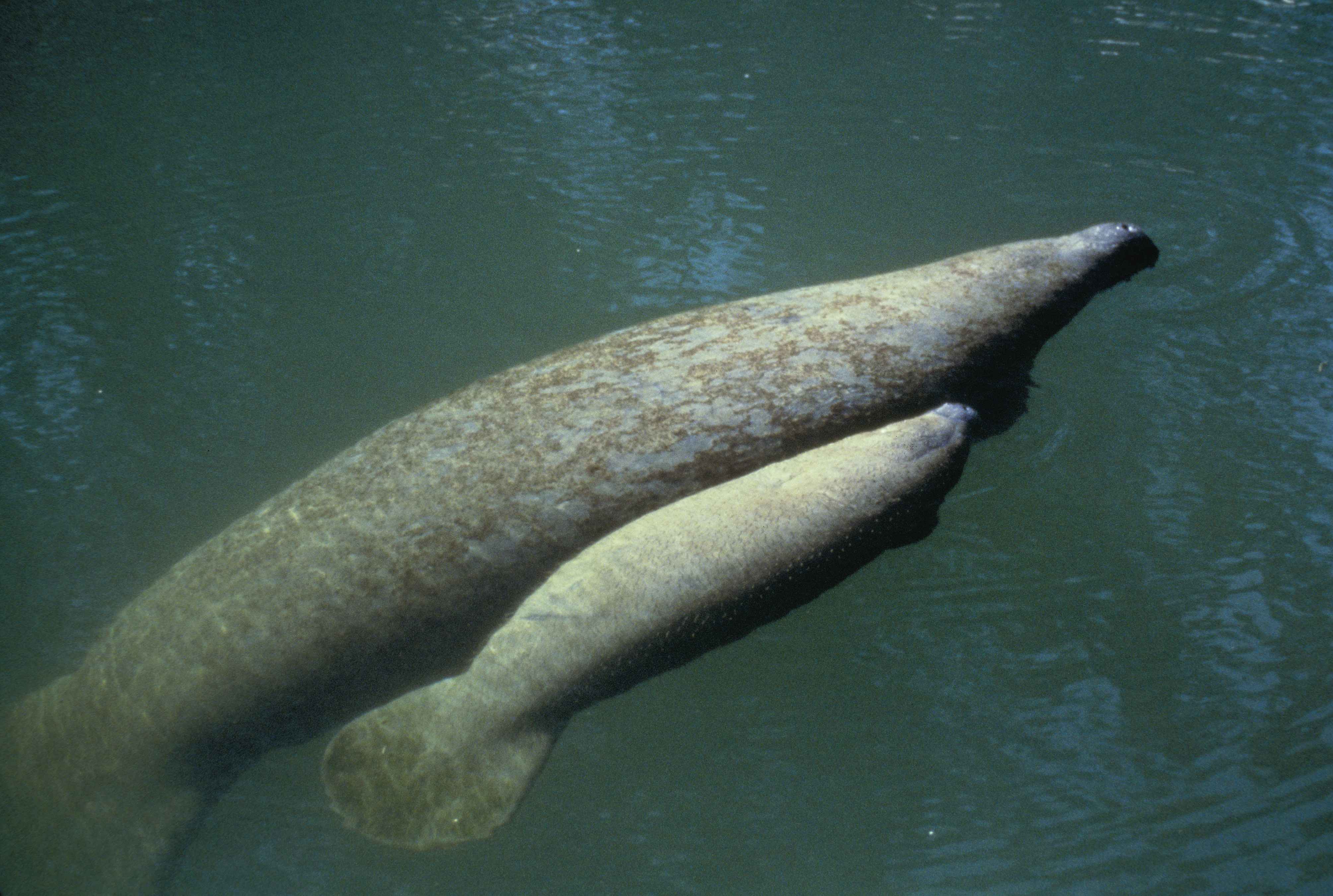
Photo: Doug Perrine / USFWS (Public Domain)
The West Indian Manatee is one of the Caribbean's most distinctive aquatic mammals, a large, slow-moving herbivore that grazes shallow coastal waters, river mouths, and freshwater wetlands. In Trinidad, it is found most reliably in the Nariva Swamp and the Gulf of Paria, where it serves as a key indicator of estuarine ecosystem health. Gentle and curious, it is also one of the species most vulnerable to human activity in the water.
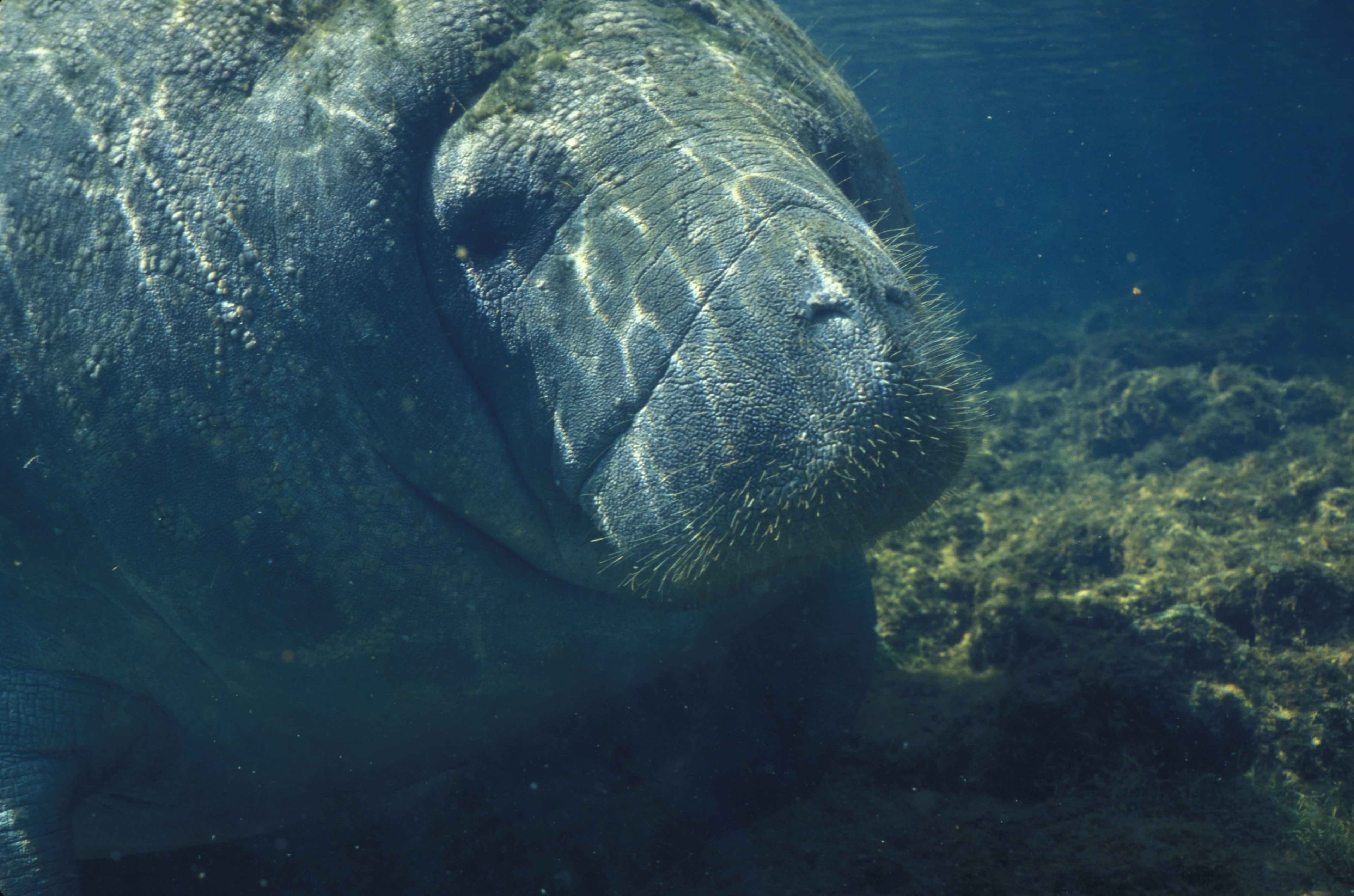
Manatees belong to the order Sirenia and are more closely related to elephants than to any marine mammal. Adults reach up to 3.5 metres in length and weigh between 200 and 600 kg. The body is barrel-shaped and largely hairless, with paddle-like forelimbs, no hind limbs, and a rounded, horizontally flattened tail. Short, fine bristles around the flexible cleft upper lip help the animal grasp aquatic vegetation. Their smooth grey skin often carries propeller scars from boat strikes, which field researchers use to identify individual animals in the field.
In Trinidad, manatees are documented in the Nariva Swamp on the east coast (the island's largest wetland), as well as in the Gulf of Paria, the Columbus Channel, and the mouths of major rivers including the Caroni and Ortoire. They graze on submerged aquatic vegetation for up to nine hours a day, consuming seagrass, water hyacinth, and algae. This intensive grazing helps maintain the health and productivity of wetland and coastal ecosystems. Manatees breathe at the surface every few minutes, though they can hold their breath for up to 20 minutes.
The manatee is a slow-reproducing species: females carry a single calf after a 13-month gestation, and the calf nurses for one to two years. Females reproduce only every two to five years, meaning populations recover very slowly from losses. Deliberate killing, accidental entanglement in fishing gear, and vessel strike injuries remain documented threats in Trinidad. Habitat degradation through wetland drainage, pollution, and the destruction of aquatic vegetation reduces the quality and extent of feeding grounds. The species is fully protected under the Conservation of Wildlife Act (COWA), is not a game species, and is listed on CITES Appendix I.
Why This Matters
The West Indian Manatee plays a role in aquatic ecosystems that is easily underestimated precisely because it is so quiet. By grazing on submerged aquatic vegetation for up to nine hours a day, manatees actively manage the health of seagrass beds and freshwater wetland vegetation. Without this grazing pressure, aquatic plants can become overgrown and senescent, reducing the oxygen, habitat complexity, and ecological productivity that juvenile fish, invertebrates, and other wetland species depend on. A healthy manatee population is a sign of a healthy wetland; their absence is a warning sign.
In Trinidad, the manatee is functionally inseparable from the Nariva Swamp, the country's largest freshwater wetland. Nariva provides drinking water, fish protein, and food security to communities along the east coast. The health of the manatee population is a direct indicator of whether that system is functioning. With fewer than 30 individuals estimated to remain in the country, the population has almost no margin for error: every death matters, every calf born matters, every uncontaminated waterway matters.
The manatee is also one of the oldest mammalian lineages in the Caribbean, a gentle giant whose evolutionary relatives walked on land 50 million years ago. It asks very little of us: clean water, undisturbed river channels, and the legal protection that already exists on paper. Delivering those things is entirely within reach.
Threats to Survival
- Boat strike
- Fishing gear entanglement
- Deliberate killing
- Water pollution
- Habitat degradation (wetland drainage)
- Seagrass and vegetation loss
- Low reproductive rate slowing recovery
Seen a West Indian Manatee?
Sighting records help us track population status and distribution. If you observe this species, please report the location, date, time, and any photos to WEPTT.
Report a Sighting