
Reptile
Olive Ridley Sea Turtle
Lepidochelys olivacea
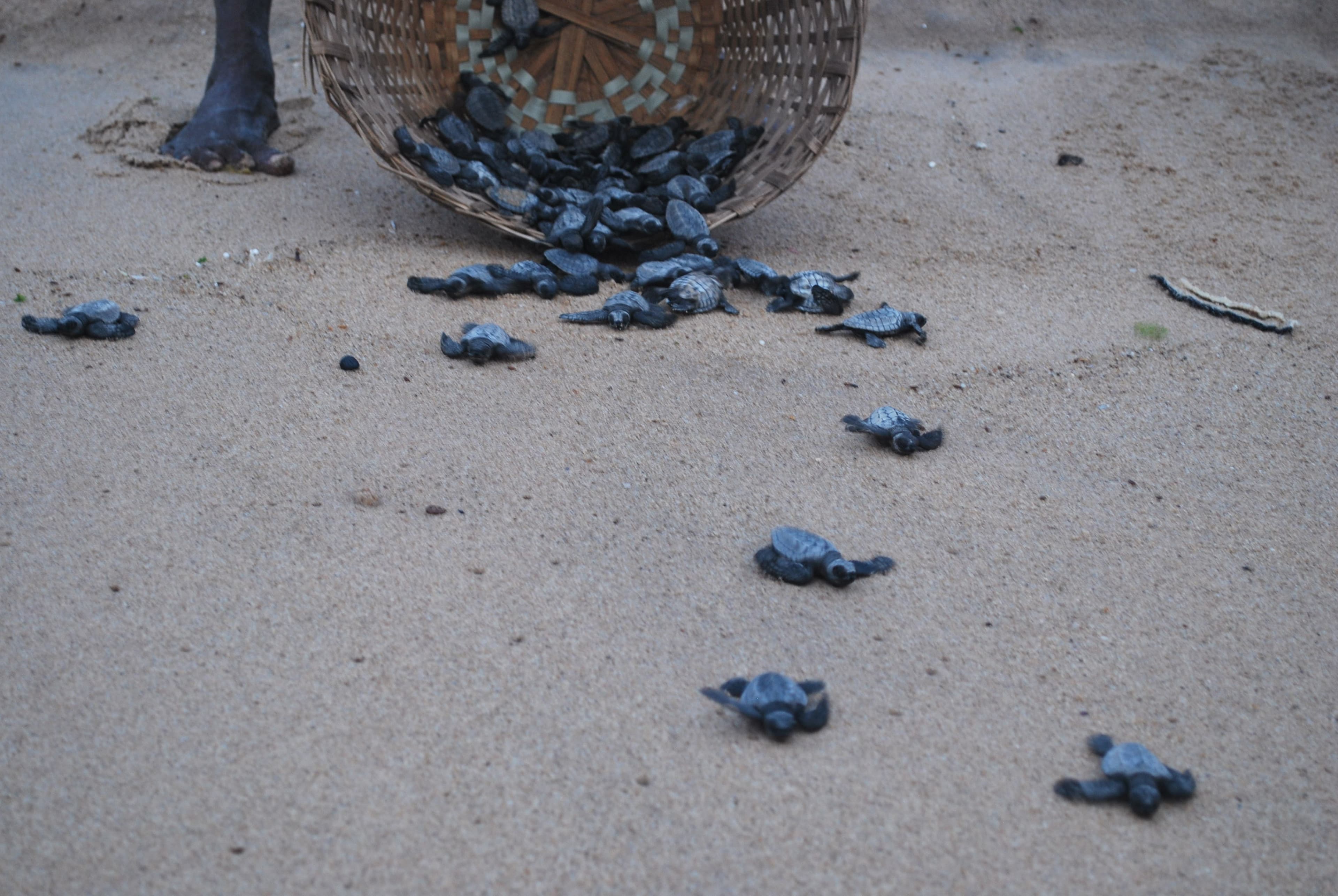
Photo: Drashokk · Visakhapatnam, India (CC BY-SA 4.0)
The Olive Ridley Sea Turtle is the smallest and most abundant sea turtle in the world, yet its Vulnerable status is a reminder of how quickly fortune can reverse for a species at sea. Found in the tropical and subtropical waters of the Atlantic, Pacific, and Indian Oceans, it passes through the offshore waters of Trinidad and Tobago as part of wide-ranging Atlantic populations. Its name comes from the distinctive olive-grey hue of its heart-shaped carapace.
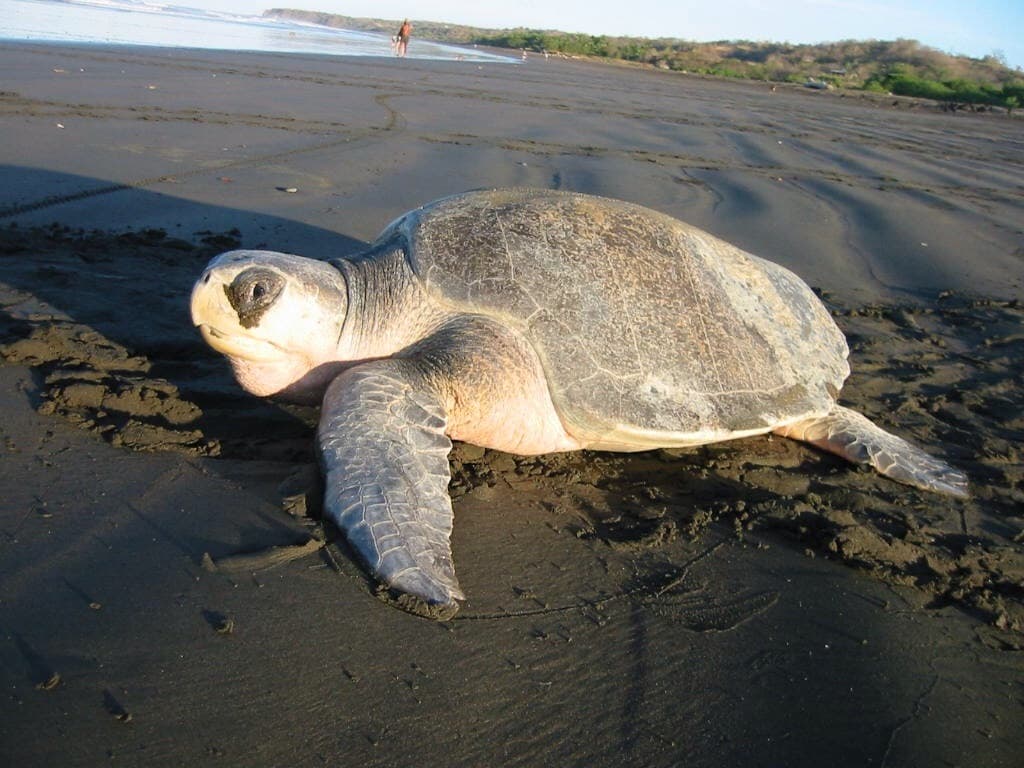
Adults typically measure 60–70 cm in carapace length and weigh between 35 and 50 kg, making the Olive Ridley the smallest of the seven living sea turtle species. The carapace is slightly wider at the rear than the front and bears 6–9 lateral scutes on each side, more than most other species, giving it a distinctive, almost rounded profile. Colouration ranges from grey-green to olive on top and pale yellow-white on the underside. Like all sea turtles, females return to the beach where they hatched to nest, guided by the earth's magnetic field across thousands of kilometres of open ocean.
In Trinidad and Tobago, the Olive Ridley is considered an offshore species, encountered in the country's Exclusive Economic Zone and surrounding Caribbean and Atlantic waters. It does not have a significant documented nesting presence on T&T beaches. The Olive Ridley is globally famous for its spectacular mass-nesting events called "arribadas", in which tens of thousands of females emerge simultaneously on a single beach over just a few nights. However, these arribada events are restricted to a handful of beaches in the Pacific and Indian Oceans; Atlantic populations, including individuals that range through T&T waters, nest individually rather than in mass aggregations.
The species faces significant pressure from accidental capture in fishing gear (bycatch), particularly in longline, trawl, and gill-net fisheries operating across its range. Marine pollution, including plastic debris that can be mistaken for prey, poses a chronic threat, as does coastal development that degrades potential nesting beaches throughout the wider Caribbean. In T&T, all sea turtles are fully protected under the Conservation of Wildlife Act (COWA) and are not game species. The Olive Ridley is also listed as an Environmentally Sensitive Species under the Environmental Management Act and on CITES Appendix I.
Why This Matters
The Olive Ridley Sea Turtle is globally the most abundant sea turtle, and its Vulnerable status is one of conservation's most instructive paradoxes: even the most numerous species cannot absorb unlimited pressure indefinitely. Globally, Olive Ridley populations have declined by 30 to 36 percent over the past century. The Pacific arrives in mass nesting events called arribadas, where tens of thousands of females emerge on a single beach in a spectacle that has no parallel in the natural world. The Atlantic population, including the individuals that pass through T&T waters, nests individually and quietly. Their presence here is part of a vast oceanic network connecting nesting beaches, foraging grounds, and feeding zones across the hemisphere.
In Trinidad and Tobago's Exclusive Economic Zone, the Olive Ridley is an offshore visitor, part of the Atlantic's open-water turtle community. Ecologically, they consume crustaceans, molluscs, jellyfish, and fish eggs, contributing to the regulation of zooplankton and invertebrate communities in pelagic and coastal waters. Any Olive Ridley that strands or is found entangled in local waters is a data point in the wider story of Atlantic sea turtle health, and a reminder that the ocean does not recognise national boundaries.
Protecting the Olive Ridley in T&T waters means adopting fishing practices that reduce bycatch, maintaining the clean coastal waters that all sea turtle species need, and recognising that the six species of sea turtle that use T&T's waters are not separate conservation problems but dimensions of a single, shared responsibility.
Threats to Survival
- Bycatch in longline, trawl, and gill-net fisheries
- Marine pollution and plastic ingestion
- Coastal development degrading nesting beaches
- Historical egg harvesting and direct take
- Climate change affecting sex ratios and nesting habitat
Seen a Olive Ridley Sea Turtle?
Sighting records help us track population status and distribution. If you observe this species, please report the location, date, time, and any photos to WEPTT.
Report a Sighting