
Reptile
Loggerhead Sea Turtle
Caretta caretta
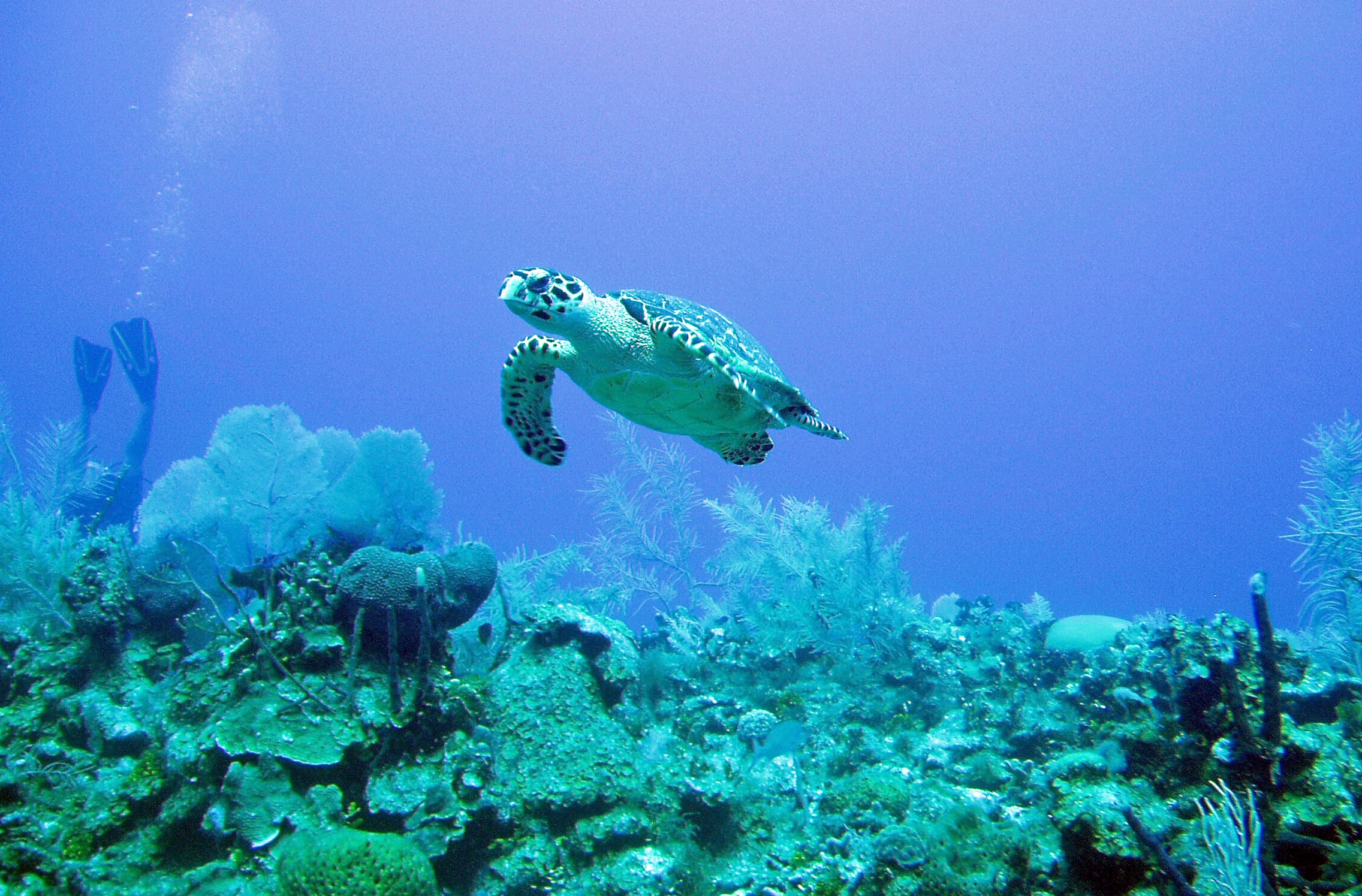
Photo: James St. John · Grand Cayman, Caribbean Sea (CC BY 2.0)
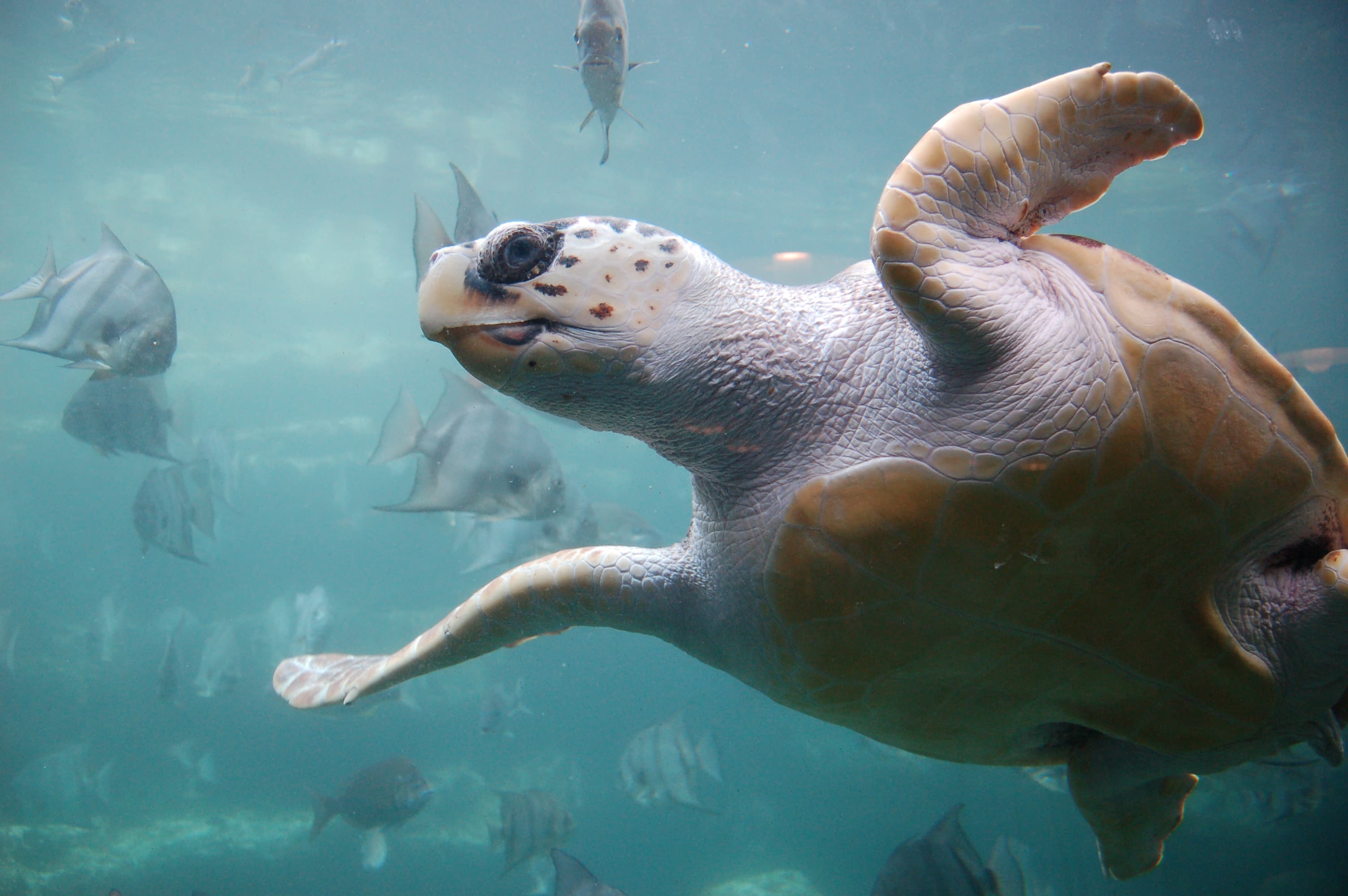
The Loggerhead Sea Turtle is the largest hard-shelled sea turtle in the world, immediately recognisable by its massive, block-like head and powerful jaws capable of crushing the toughest shellfish. In Trinidad and Tobago, loggerheads move through offshore and coastal waters as part of their wide Atlantic migrations, making them a relatively uncommon but important presence in local seas. Their vulnerability to fishing gear makes every encounter in T&T waters a conservation concern.
Named for its disproportionately large head, the loggerhead carries a reddish-brown, heart-shaped carapace that can reach 90 cm in length, with adults typically weighing between 80 and 200 kg. Those powerful jaws are purpose-built for a diet of hard-shelled prey, crushing conch, whelks, crabs, and other benthic invertebrates with ease, though jellyfish and other soft prey are also taken.
Loggerheads are not established nesters in Trinidad and Tobago; the species nests primarily on beaches in Florida, the Mediterranean, and parts of the wider Caribbean. Their presence in T&T waters is as oceanic and coastal wanderers: juveniles drift with Atlantic gyre currents and can spend years in the open ocean before settling into coastal foraging grounds. Adults and sub-adults pass through or reside temporarily in the productive shelf waters around both islands. Rare, incidental nesting events have been reported on Trinidad beaches, but these are exceptional.
The primary threat to loggerheads in T&T is incidental capture (bycatch) in longline fisheries targeting swordfish and tuna, as well as in coastal trawls and gillnets. Turtles that ingest or become entangled in marine debris face serious injury or death. Vessel strikes in busy shipping lanes near the Gulf of Paria are an additional hazard. Under the Conservation of Wildlife Act, all sea turtles in Trinidad and Tobago are fully protected, and the species is further shielded by its CITES Appendix I listing and EMA Environmentally Sensitive Species designation.
Why This Matters
The Loggerhead Sea Turtle, with its massive crushing jaws, fills a specific ecological role in marine ecosystems that no other species can replicate. As a predator of hard-shelled benthic invertebrates, including conch, whelks, crabs, and sea urchins, loggerheads regulate the populations of organisms that would otherwise become dominant on the seafloor. Sea urchin outbreaks, when unchecked, can denude coral reefs of algae and destabilise reef communities. The loggerhead's place in the food web is less visible than the surface spectacle of a nesting leatherback, but no less important.
In Trinidad and Tobago, the loggerhead is primarily a visitor to offshore and coastal waters, following ocean current systems that carry it across the Atlantic as part of migrations of thousands of kilometres. The productivity of T&T's waters makes them significant foraging and resting grounds for these long-distance travellers. Every loggerhead that survives passage through local waters, free of entanglement in fishing gear and free of boat strikes, is one more individual contributing to the wider Atlantic population's effort to recover from centuries of overexploitation.
The loggerhead's Endangered status is a reminder that abundance elsewhere does not guarantee safety here. Regional conservation requires every nation in a species' range to take its obligations seriously. Trinidad and Tobago's laws already provide the framework; what the loggerhead needs is for those laws to be enforced and for its passage through local waters to become reliably safe.
Threats to Survival
- Bycatch in longline, trawl, and gillnet fisheries
- Marine debris ingestion and entanglement
- Vessel strike
- Climate change affecting nesting habitat (range-wide)
- Artificial lighting disorienting hatchlings (range-wide)
Seen a Loggerhead Sea Turtle?
Sighting records help us track population status and distribution. If you observe this species, please report the location, date, time, and any photos to WEPTT.
Report a Sighting