Reptile
Hawksbill Sea Turtle
Eretmochelys imbricata
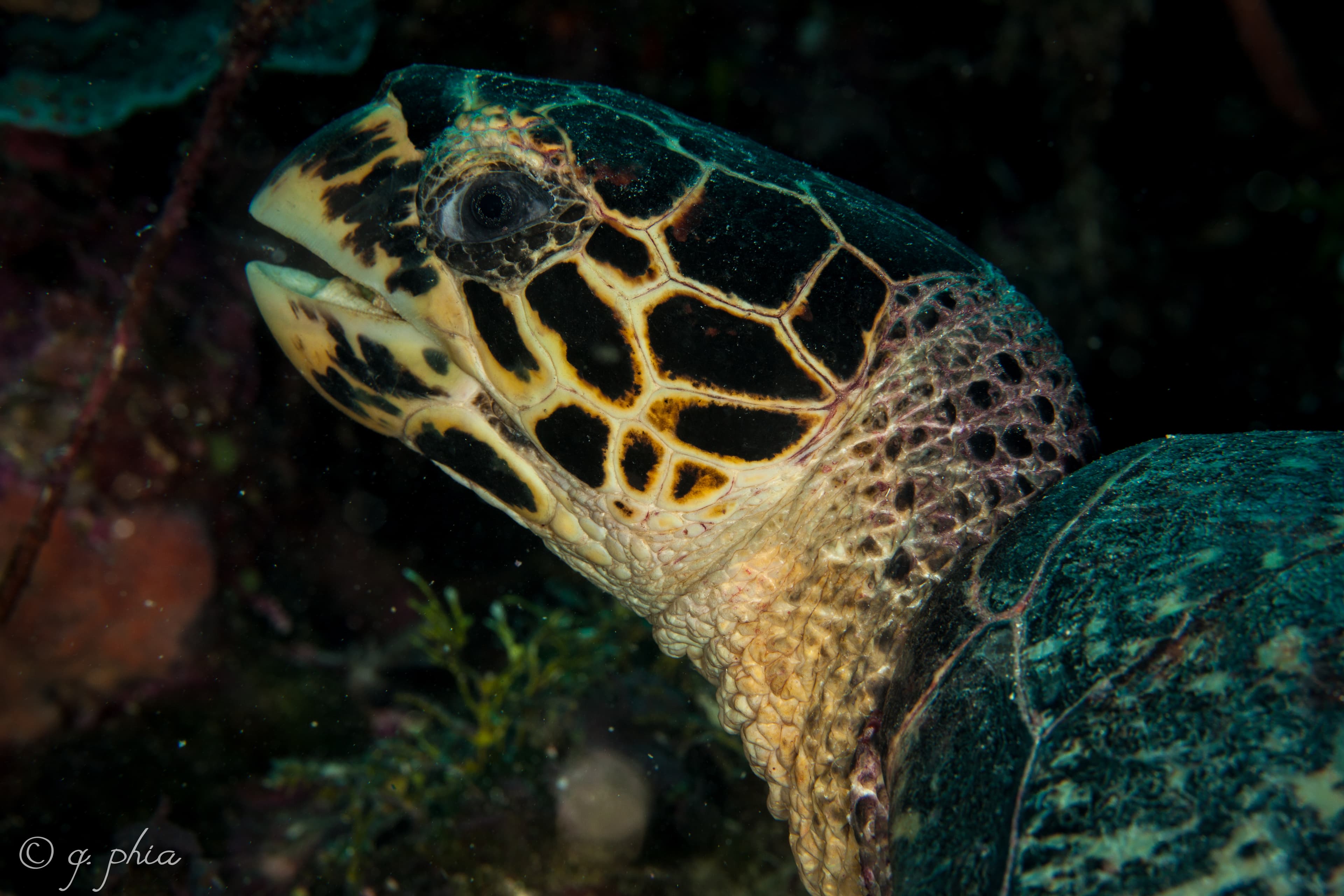
Photo: q phia · Wakatobi, Indonesia (CC BY 2.0)
The Hawksbill Sea Turtle is one of the Caribbean's most iconic marine reptiles, recognisable by its narrow hawk-like beak and striking amber and brown tortoiseshell scutes. In Trinidad and Tobago, it is primarily a Tobago species, foraging across coral reefs and nesting on beaches from Stonehaven Bay to Charlotteville. Centuries of exploitation for its beautiful shell have driven it to Critically Endangered status, and it remains under serious pressure today.
The hawksbill is the only sea turtle species specialised for feeding primarily on marine sponges, organisms toxic to most other animals. This unique diet makes it ecologically irreplaceable on coral reefs: by controlling sponge populations, hawksbills maintain the structural complexity of reef systems that support thousands of other species. In Tobago, key foraging reefs include Buccoo Reef, the Speyside and Charlotteville reefs in the northeast, and the Culloden Bay area in the southwest.
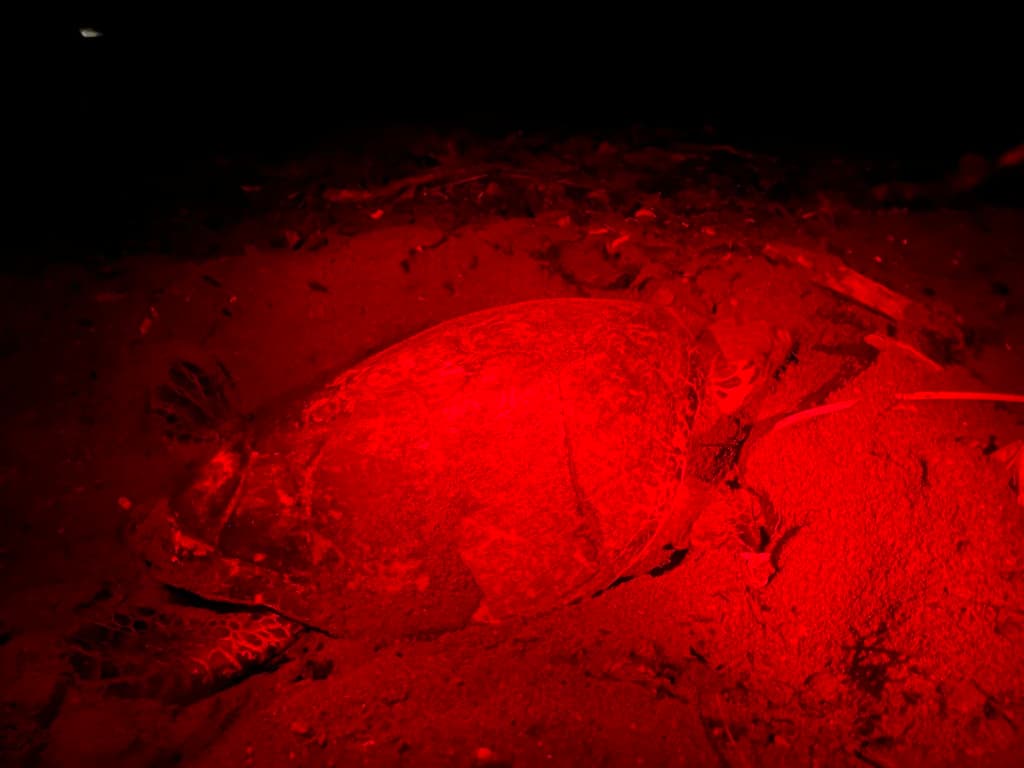
Adults typically reach 60–95 cm in straight carapace length and weigh between 45 and 90 kg. Their overlapping scutes, a feature unique among sea turtles, are what made them a target of the global tortoiseshell trade for centuries. The narrow, pointed beak that gives the species its name allows it to extract sponges from crevices in coral reefs inaccessible to other grazers. Nesting in Tobago occurs primarily between April and November, with females coming ashore at night to lay clutches of approximately 130–160 eggs on beaches such as Stonehaven Bay (Grafton), Turtle Beach (Great Courland Bay), and the beaches around Speyside and Charlotteville.
Despite being fully protected under Trinidad and Tobago's Conservation of Wildlife Act (COWA) and listed on CITES Appendix I since 1977, illegal shell trade and nest poaching continue to threaten local populations. The Buccoo Reef Trust in Tobago runs active beach monitoring and nest protection programmes, and the Institute of Marine Affairs conducts marine turtle monitoring work. Reef degradation, entanglement in fishing gear, coastal development, and the growing effects of climate change compound the pressure on a species whose global population has declined by an estimated 80% over the past century.
The Hawksbill is listed as an Environmentally Sensitive Species (ESS) under the Environmental Management Act, providing additional legal protection for both the animal and its critical coastal and marine habitat. Tobago's Buccoo Reef and Bon Accord Lagoon, one of the hawksbill's most important local habitats, is designated a Ramsar Wetland of International Importance, giving it an additional layer of international conservation recognition.
Why This Matters
The Hawksbill Sea Turtle is the only species on Earth that has evolved to prey primarily on marine sponges, organisms that are chemically toxic to almost every other animal. This diet is not an interesting footnote; it is the mechanism by which hawksbills maintain the structural integrity of coral reef systems across the Caribbean. Without hawksbill grazing, sponges overgrow and smother coral colonies, reducing the three-dimensional complexity that makes coral reefs among the most biodiverse marine ecosystems on the planet. Tobago's reefs, famed for their clarity and life, depend in part on hawksbills doing their ecological work.
This species has been commercially exploited for its beautifully patterned shell for centuries, a trade that drove it to Critically Endangered status globally and eliminated populations across much of its former range. The recovery of the Caribbean hawksbill is one of the more meaningful conservation challenges of this generation. Every nest that hatches on a Tobago beach, every juvenile that survives to adulthood, is part of a population slowly rebuilding from a historic low. The Buccoo Reef, a Ramsar Wetland of International Importance, is where many of these animals feed; what happens to that reef determines whether the recovery continues.
Tobago has built its identity as a world-class diving and snorkelling destination on the health of its reefs. The hawksbill is both a beneficiary of that reef health and a condition of it. Protecting this turtle and its habitat is not a cost; it is the ecological investment that makes everything else Tobago's marine economy depends on possible.
Threats to Survival
- Illegal shell trade
- Nest poaching
- Reef degradation
- Entanglement in fishing gear
- Coastal development
- Vessel strike
- Climate change
- Artificial beach lighting
- Tourism disturbance at nesting sites
Seen a Hawksbill Sea Turtle?
Sighting records help us track population status and distribution. If you observe this species, please report the location, date, time, and any photos to WEPTT.
Report a Sighting