Wildlife Sanctuary · Trinidad
Southern Watershed Game Sanctuary
Game Sanctuary · Conservation of Wildlife Act
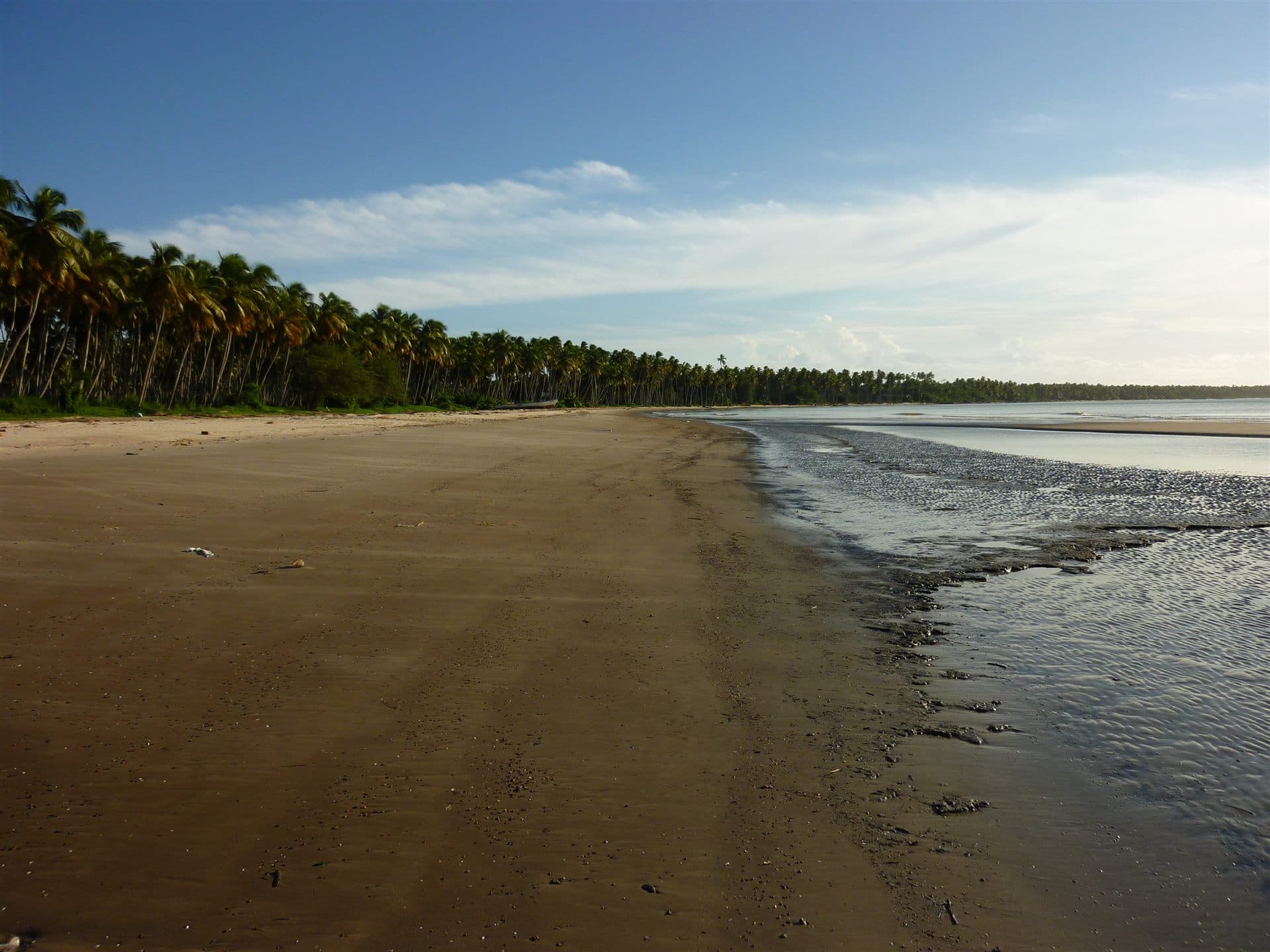
Photo: Grueslayer (Baldur Bruckner) · Icacos, southwest Trinidad (representative habitat) (CC BY-SA 4.0)
The Southern Watershed Game Sanctuary protects forested hill country in the oil-producing south of Trinidad, securing one of the region's most important freshwater catchments and providing refuge for wildlife in a landscape heavily pressured by the petroleum industry and agricultural expansion. It holds the rare distinction of dual legal protection: a Game Sanctuary under the Conservation of Wildlife Act and a prohibited area under the Forests Act.
The sanctuary encompasses a tract of tropical forest in the Southern Range - a modest but ecologically significant hill system extending across the southern peninsula of Trinidad. These forests intercept rainfall and channel it into rivers and streams that supply communities in south Trinidad with freshwater. The interlocking canopy slows runoff, reduces erosion, and maintains water quality at a landscape scale that no downstream engineering can replicate.
Wildlife within the sanctuary includes forest birds of prey such as the roadside hawk and bat falcon, forest mammals including agoutis, armadillos, opossums, and various bat species, as well as reptiles ranging from tree boas to multiple lizard families. The COWA Game Sanctuary designation prohibits all hunting within the gazetted boundary year-round, reducing the direct take that has historically suppressed wildlife populations throughout southern Trinidad. The sanctuary is also declared a prohibited area under the Forests (Prohibited Areas) Order made under the Forests Act, Chap. 66:01 - a dual legal status that restricts unlicensed entry, clearing, settlement, and extraction within its bounds and places enforcement authority in both the Wildlife Section and the Forestry Division.
The sanctuary's location in T&T's petroleum heartland creates a distinctive threat profile. Active and legacy oil infrastructure - pipelines, access roads, well pads, and borrow pits - fragments forest cover and introduces spill and contamination risks absent from the country's more remote protected areas. Agricultural encroachment from cultivation of the forest margins, illegal squatting, and bushfire during the dry season compound these pressures. Effective protection requires coordinated response between the Forestry Division, the Environmental Management Authority, and the relevant energy sector entities.
Why This Matters
Southern Trinidad's identity as an oil-producing landscape can obscure the fact that it also contains some of the most important forest catchments in the island's south. The Southern Watershed Game Sanctuary protects a tract of tropical forest in the Southern Range whose primary ecological function is precisely what its name suggests: it intercepts rainfall and channels it into the rivers and streams that supply freshwater to communities across the oil-producing south. In a region where land is heavily developed and water demand is high, the forests of the Southern Range are not a luxury. They are the infrastructure that makes southern Trinidad habitable.
The wildlife that persists in these forests is adapted to a landscape shaped by both natural processes and human industry. Forest raptors, agoutis, armadillos, tree boas, and dozens of bat species occupy a mosaic of intact and recovering forest that has survived decades of oil infrastructure pressure. That survival is not guaranteed. Pipelines and access roads have fragmented portions of the sanctuary's interior; hydrocarbon spills from legacy infrastructure introduce contamination that forest soils take years to process; residential and industrial development spreading outward from Fyzabad and La Brea continues to erode the sanctuary's margins. The dual protection under both the Conservation of Wildlife Act and the Forests Act is in place. What matters is whether those laws are enforced consistently.
The Southern Watershed sanctuary also represents a model for how a forested reserve can coexist with an energy economy, when both are managed responsibly. The NGC's reforestation work in the nearby Morne L'Enfer reserve shows that the energy sector can invest in forest restoration as part of its operations. That precedent is worth building on. The forests of south Trinidad are not an obstacle to development; they are the ecological foundation that makes sustained development there possible.
Legal Protections
This sanctuary is gazetted under the Conservation of Wildlife Act. Hunting, trapping, and disturbance of wildlife within its boundaries is a criminal offence. Penalties include fines and imprisonment. If you witness illegal activity within this sanctuary, report it immediately.
Report a ViolationCurrent Threats
- Oil infrastructure and pipeline incursions
- Hydrocarbon spills and soil contamination
- Agricultural encroachment
- Illegal squatting and clearing
- Bushfire during dry season
- Inadequate cross-agency enforcement
Primary Sources & Legal Citations
- Conservation of Wild Life Act, Chap. 67:01 · First Schedule, Item 5
- Forests (Prohibited Areas) Order, Chap. 66:01 · Subsection (14)[GN 62/1999]