Wildlife Sanctuary · Trinidad
Soldado Rock Game Sanctuary
Game Sanctuary · Conservation of Wildlife Act
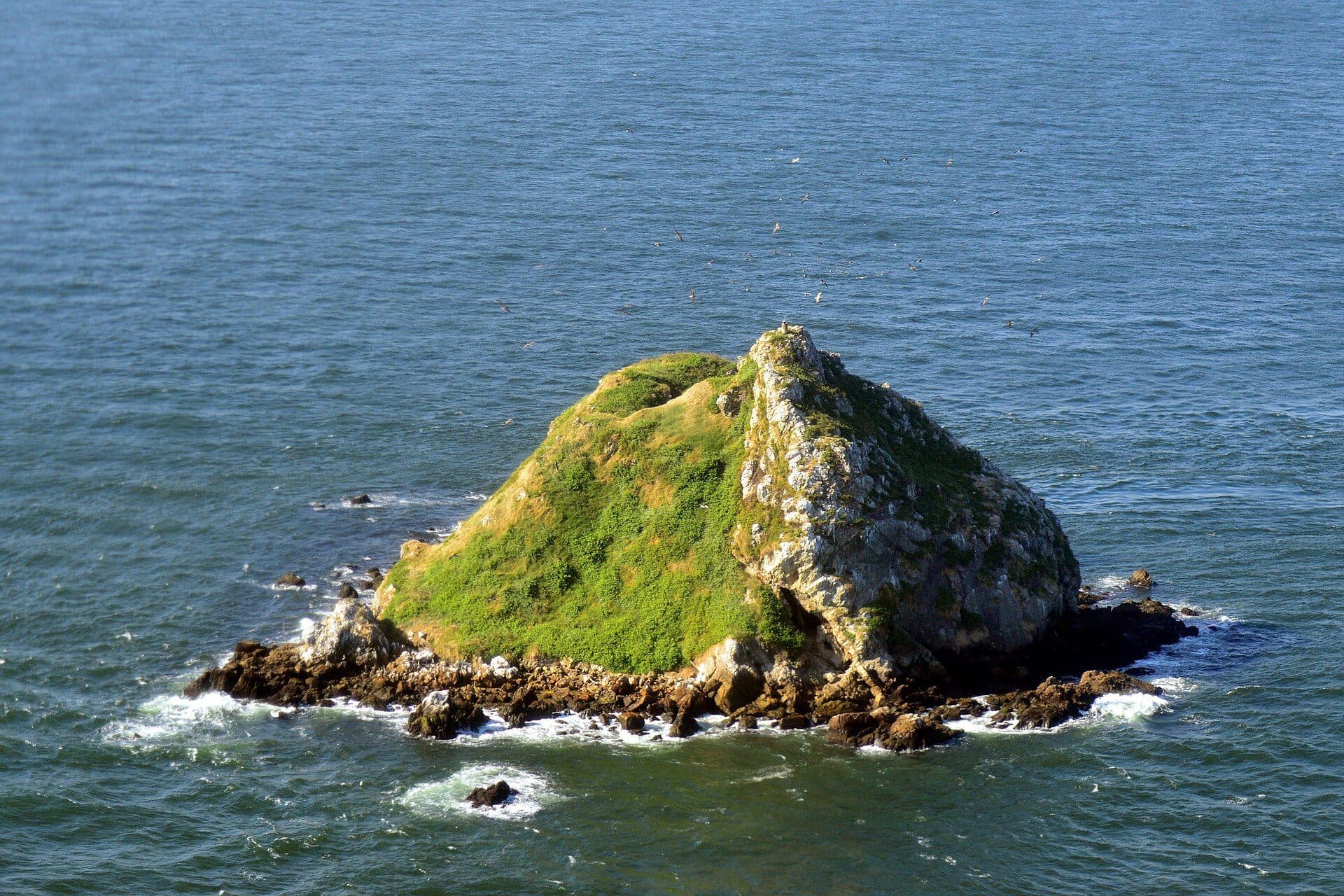
Photo: shares_inDeleware · Soldado Rock, Trinidad and Tobago (CC BY-SA 4.0)
Soldado Rock is a tiny limestone islet rising just 35 metres above the Gulf of Paria, roughly 10 km south-west of Icacos Point near the Serpent's Mouth. Despite its single hectare of bare rock and scrub, it supports one of Trinidad and Tobago's most important seabird nesting colonies and holds a uniquely layered legal protection - declared a game sanctuary under the Conservation of Wildlife Act and simultaneously listed as a prohibited area under the Forests Act.
Formally protected since 1934, Soldado Rock was gazetted as a wildlife sanctuary to safeguard the dense colonies of seabirds that return each year between March and July. The principal breeding species include the sooty tern (Onychoprion fuscatus) and brown noddy (Anous stolidus), supplemented by sandwich terns, brown boobies, and grey-breasted martins. Magnificent frigatebirds are regular aerial visitors, exploiting the concentration of nesting terns and boobies through kleptoparasitism - harassing birds mid-flight until they disgorge their catch. The site is managed by the Forestry Division under the Ministry of Agriculture.
The rock has an unusual political history. Originally claimed by Venezuela, Soldado Rock was transferred to the Crown Colony of Trinidad and Tobago on 26 February 1942 under the Anglo-Venezuelan Treaty, in exchange for Patos Island in the Dragon's Mouth. Its geology is equally distinctive: the islet is composed of Paleocene and Eocene limestone rich in mollusc and foraminifera fossils, making the Soldado Formation a reference horizon in Caribbean stratigraphy. Vegetation is sparse - plumbago, portulaca, and low scrub - providing ground-nesting habitat without the canopy cover found on forested cays.
Soldado Rock carries dual statutory protection. In addition to its designation as a game sanctuary under the Conservation of Wildlife Act (Ch. 67:01), it is scheduled as a prohibited area under the Forests Act (Ch. 66:01), meaning public access without a permit from the Forestry Division is a criminal offence under both pieces of legislation. Principal threats to the colony include disturbance from recreational and fishing vessels venturing too close during the nesting season, marine pollution and plastic ingestion affecting adult and chick survival, and long-term shifts in prey availability driven by sea-surface temperature changes in the southern Gulf of Paria.
Why This Matters
Soldado Rock, a single hectare of limestone rising 35 metres above the Gulf of Paria, is proof that the physical size of a conservation site has nothing to do with its ecological importance. Every year between March and July, this bare rock becomes the most important seabird breeding colony in southern Trinidad, hosting thousands of sooty terns, brown noddies, brown boobies, and sandwich terns. These species converge here because Soldado offers the one thing colonial seabirds require above all others: an island inaccessible enough to predators and human disturbance to allow successful breeding. In that narrow window of breeding season, this tiny rock sustains entire year-classes of birds that will range across the tropical Atlantic for years to come.
Seabird colonies serve the ocean in ways that are not always appreciated. The guano deposited by thousands of nesting birds on and around the island is a significant nutrient input into the surrounding marine environment, a fertilising pulse that supports plankton productivity, fish populations, and the food web beneath. The concentration of birds returning to the colony also creates foraging aggregations visible from a distance, which artisanal fishers have historically used as a natural indicator of productive fishing areas beneath the diving birds. The colony is, in this sense, an ecosystem service provider as well as a wildlife spectacle.
Soldado Rock holds a piece of T&T's legal and geopolitical history as well: transferred from Venezuela in 1942, a physical consequence of the Anglo-Venezuelan Treaty. Its protection since 1934, under both the Conservation of Wildlife Act and the Forests Act, represents one of the country's earliest and most enduring conservation commitments. Maintaining that protection, including active measures to prevent the accidental introduction of rats and to enforce the exclusion zone during the nesting season, is an obligation that honours a commitment made nearly a century ago.
Legal Protections
This sanctuary is gazetted under the Conservation of Wildlife Act. Hunting, trapping, and disturbance of wildlife within its boundaries is a criminal offence. Penalties include fines and imprisonment. If you witness illegal activity within this sanctuary, report it immediately.
Report a ViolationCurrent Threats
- Vessel disturbance during the March–July nesting season causing colony abandonment
- Potential introduction of invasive predators via fishing boats
- Marine plastic pollution and prey fish decline
- Sea-surface temperature variability reducing forage fish in the southern Gulf of Paria
- Oil spill risk from hydrocarbon infrastructure in the Gulf of Paria
Primary Sources & Legal Citations
- Conservation of Wild Life Act, Chap. 67:01 · First Schedule, Item 8
- Forests (Prohibited Areas) Order, Chap. 66:01 · Subsection (14)[GN 62/1999]