Wildlife Sanctuary · Trinidad
Morne L'Enfer Game Sanctuary
Game Sanctuary · Conservation of Wildlife Act
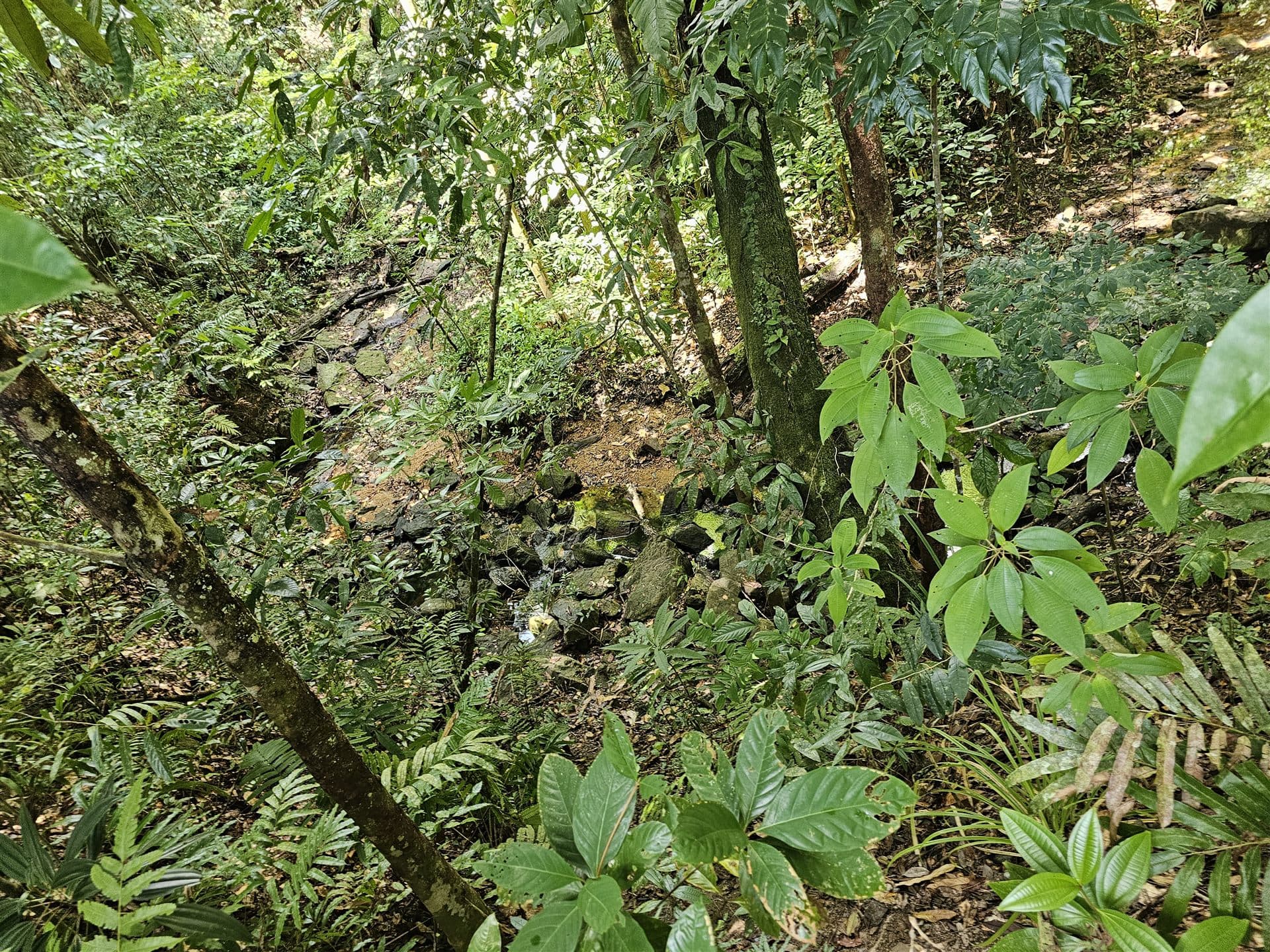
Photo: WEPTT · Southwest Trinidad (CC BY-SA 4.0)
Morne L'Enfer Game Sanctuary protects one of the most ecologically significant forest tracts in southwest Trinidad, a reserve of semi-evergreen seasonal and secondary forest rising above the oil-producing lowlands near Fyzabad and La Brea. The reserve carries dual statutory protection: a Game Sanctuary under the Conservation of Wildlife Act and a prohibited area under the Forests Act, placing it among the most comprehensively protected forests in the country's south.
The reserve sits within the southwest peninsular forests of Trinidad, a landscape shaped by both geological richness and century-long petroleum extraction. The forest is predominantly semi-evergreen seasonal in character, with a canopy reaching 20 to 25 metres and emergent trees rising higher in undisturbed patches. Tree species typical of the south Trinidad forest zone, including mora, cedar, balata, and poui, form the structural backbone of intact stands, while secondary regrowth covers areas degraded by historical clearance and industrial incursion. The reserve drains into river systems supplying communities in the Siparia and Fyzabad districts, making its forests a functioning freshwater catchment in a region otherwise dominated by developed land and petroleum infrastructure. Bird diversity within the reserve includes forest species representative of Trinidad's South American-derived avifauna: violaceous trogon, channel-billed toucan, blue-crowned motmot, and white-bearded manakin are among the species associated with intact seasonal forest in this part of the island. Mammals include red-rumped agouti, armadillo, collared peccary, and ocelot, while the golden tegu (matte) and boa constrictor (macajuel) represent the reptile fauna characteristic of southwest Trinidad forest habitats.
The reserve holds dual legal protection, combining the hunting prohibition of the Conservation of Wildlife Act (COWA, Chap. 67:01) with the entry and use restrictions of the Forests (Prohibited Areas) Order made under the Forests Act (Chap. 66:01). As a Game Sanctuary under the First Schedule of COWA, all hunting within the gazetted boundary is prohibited year-round. The Forests Act designation adds a further layer of control: unauthorised entry, clearing, settlement, and extraction of forest produce are offences under that statute, with enforcement shared between the Wildlife Section and the Forestry Division. The National Gas Company of Trinidad and Tobago (NGC) has undertaken significant reforestation work within the reserve, replanting approximately 210 hectares of critically degraded secondary forest as part of its no-net-loss commitment following the construction of the Cross-Island Pipeline corridor, with plantings of cedar, mahogany, balata, mahoe, and poui.
The principal threats to Morne L'Enfer are shaped by the reserve's location at the intersection of Trinidad's oil belt, expanding residential areas, and agricultural land. Oil and gas infrastructure, including pipeline corridors and associated access roads, has fragmented the forest interior and created permanent openings that facilitate secondary encroachment. Residential and industrial development spreading outward from Fyzabad, La Brea, and Siparia continues to erode the reserve's margins. Illegal hunting, bushfire during the dry season, and the slow recovery of areas degraded before formal protection are recurring challenges. The reserve's predominantly secondary forest character means that sustained enforcement and active restoration investment are both required for effective long-term conservation.
Why This Matters
Morne L'Enfer stands as one of the most instructive examples in Trinidad's conservation landscape of a natural area persisting under sustained industrial and urban pressure. The reserve's approximately 3,868 hectares of semi-evergreen seasonal forest rise above a landscape shaped by petroleum extraction, residential expansion, and agricultural use, in a region of the island where intact forest cover is rare. The rivers draining from Morne L'Enfer supply freshwater to communities across the Siparia and Fyzabad districts, making the reserve's watershed function a direct service to the southern population in an area where few other undeveloped catchments remain.
The wildlife that has survived in this forest, including ocelots, collared peccary, agoutis, channel-billed toucans, and boa constrictors, represents a community that has persisted through decades of surrounding development. These are not newcomers that colonised after disturbance; they are survivors of a forest that was once far more extensive and is now surrounded on all sides by changed land. That persistence is fragile. The oil and gas pipeline corridors and access roads that cross the reserve have fragmented it into sections that are ecologically less connected than the legal designation implies. The residential development spreading outward from Fyzabad and La Brea continues to press against the reserve's boundaries. Active management and consistent enforcement are what maintain the difference between a functioning forest reserve and a name on a map.
The NGC's reforestation of approximately 210 hectares of degraded forest within the reserve demonstrates something important: that industrial operators within the region have both the resources and, under appropriate regulatory frameworks, the obligation to contribute to forest restoration. That precedent is worth building on. A reserve like Morne L'Enfer, embedded in one of T&T's most industrially active landscapes, is exactly where the partnership between conservation institutions, energy companies, and local communities needs to be strongest.
Legal Protections
This sanctuary is gazetted under the Conservation of Wildlife Act. Hunting, trapping, and disturbance of wildlife within its boundaries is a criminal offence. Penalties include fines and imprisonment. If you witness illegal activity within this sanctuary, report it immediately.
Report a ViolationCurrent Threats
- Oil and gas infrastructure fragmenting the forest interior
- Residential and industrial encroachment from Fyzabad, La Brea, and Siparia
- Illegal hunting and poaching
- Dry-season bushfire in degraded secondary growth
- Slow natural recovery of historically cleared patches
- Inadequate cross-agency enforcement capacity
Primary Sources & Legal Citations
- Conservation of Wild Life Act, Chap. 67:01 · First Schedule, Item 11
- Forests (Prohibited Areas) Order, Chap. 66:01 · Subsection (14)[GN 62/1999]