Wildlife Sanctuary · Trinidad
Central Range Game Sanctuary
Game Sanctuary · Conservation of Wildlife Act
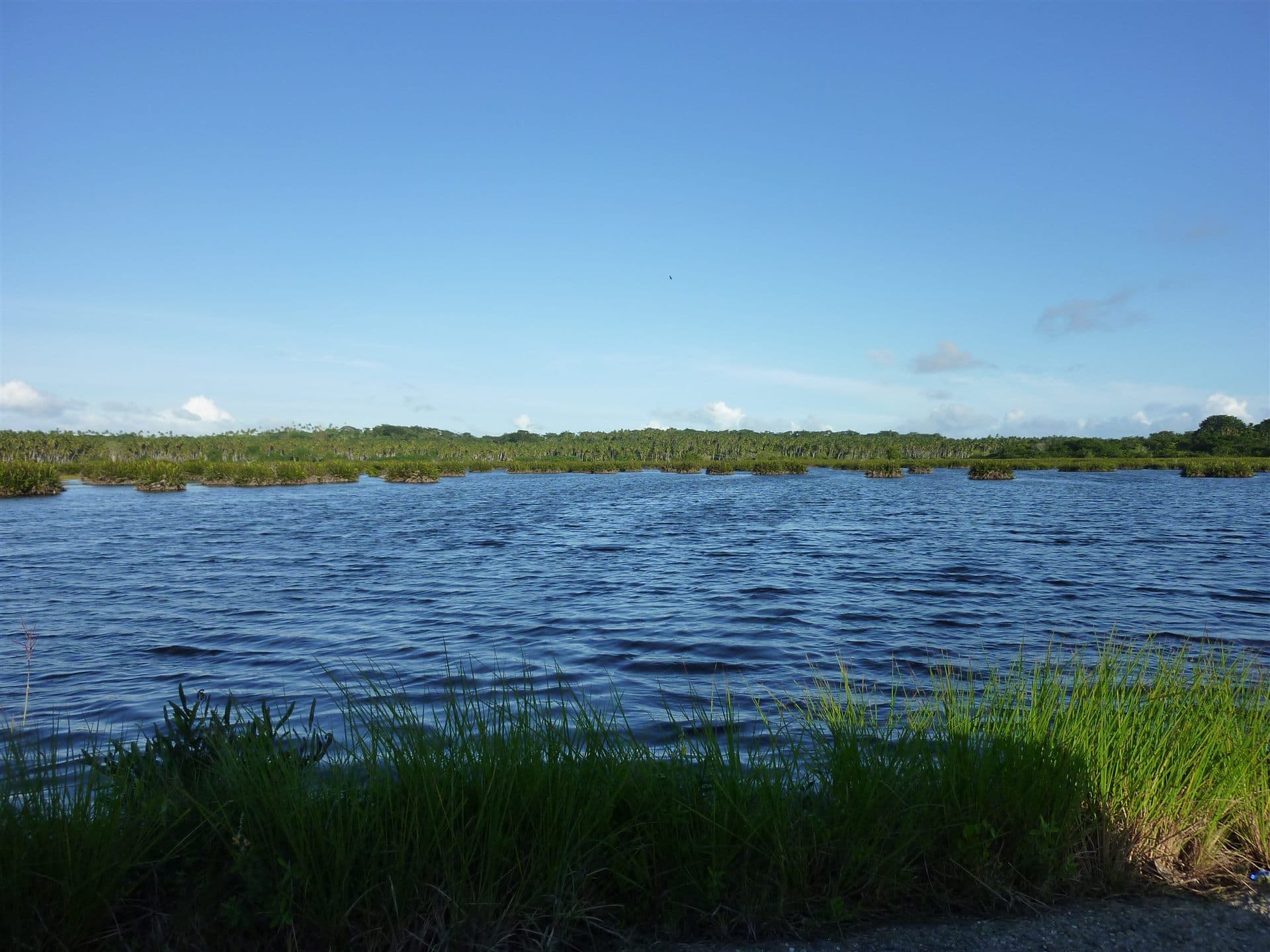
Photo: Grueslayer (Baldur Bruckner) · Icacos, southwest Trinidad (representative habitat) (CC BY-SA 4.0)
The Central Range Game Sanctuary protects the forested hill country running through the interior of Trinidad, safeguarding a critical freshwater watershed and a mosaic of tropical forest habitats that support terrestrial wildlife under sustained pressure from surrounding land-use change. It carries dual legal protection: declared a Game Sanctuary under the Conservation of Wildlife Act and a prohibited area under the Forests Act.
Rising modestly compared to the Northern Range, the Central Range hills span the width of Trinidad from the Montserrat Hills in the west to the Tamana Hills in the east, reaching roughly 300 metres at their highest points. The forests - a mix of evergreen seasonal forest and secondary growth at various stages of recovery - are dominated by species such as bois mulatre, guatacare, and blackheart. The dense canopy intercepts rainfall and feeds rivers draining to both the north and south coasts, making the range a disproportionately important freshwater catchment relative to its modest elevation.
The sanctuary shelters a representative cross-section of Trinidad's interior terrestrial fauna. Red brocket deer, collared peccary (quenk), agouti, armadillo, opossum, and tayra move through the forest interior, while a broad diversity of forest birds - including multiple raptor species and forest-specialist passerines - depend on the intact canopy. The Game Sanctuary designation under the Conservation of Wildlife Act prohibits hunting within the gazetted area year-round, reducing direct take pressure on these populations. The sanctuary also appears in the Forests Act schedule of prohibited areas, meaning entry and activities within the gazetted boundary are subject to the additional restrictions of the Forests Act, Chap. 66:01, enforceable by the Forestry Division independently of COWA.
Agricultural encroachment at the forest margins, illegal clearing for cultivation, and squatting along the range foothills continue to erode the sanctuary's edges. Bushfire during the dry season causes periodic damage to secondary forest patches, and illegal hunting - particularly for deer and peccary - remains a persistent enforcement challenge. The dual legal framework, while providing overlapping grounds for prosecution, requires coordinated enforcement between the Wildlife Section and the Forestry Division to be effective across the full sanctuary area.
Why This Matters
The Central Range runs through the interior of Trinidad like a spine, modest in elevation compared to the Northern Range but disproportionate in ecological importance. Its forests intercept rainfall from both north and south, feeding rivers that drain to both coasts, including systems that supply communities across central Trinidad with freshwater. At 300 metres, the Central Range is not a wilderness of dramatic peaks; it is a working watershed and a biological corridor connecting the forested landscapes of north and south Trinidad, and that connectivity is its most important function.
Red brocket deer, collared peccary, agouti, tayra, and a full suite of forest raptors and passerines move through these forests in ways that depend on the corridor remaining continuous. Fragmentation of the Central Range into isolated patches would strand populations and accelerate local extinctions even where no direct hunting occurs. The forest also provides services that extend far beyond its boundaries: carbon storage, slope stabilisation, flood regulation, and the maintenance of water quality in the rivers draining from it. These are not abstract ecological values; they are the physical basis of agricultural productivity and community water security across central Trinidad.
The Central Range has perhaps received less conservation attention than the Northern Range or Nariva, partly because its modest elevation makes it less dramatic. But ecological importance is not measured in metres. A country's interior forest is as much a part of its natural heritage as its highest peaks, and the Central Range's role in maintaining Trinidad's hydrological balance makes it indispensable to the island's long-term environmental stability.
Legal Protections
This sanctuary is gazetted under the Conservation of Wildlife Act. Hunting, trapping, and disturbance of wildlife within its boundaries is a criminal offence. Penalties include fines and imprisonment. If you witness illegal activity within this sanctuary, report it immediately.
Report a ViolationCurrent Threats
- Agricultural encroachment
- Illegal clearing and squatting
- Illegal hunting
- Bushfire
- Watershed degradation
- Inadequate inter-agency enforcement
Primary Sources & Legal Citations
- Conservation of Wild Life Act, Chap. 67:01 · First Schedule, Item 3
- Forests (Prohibited Areas) Order, Chap. 66:01 · Subsection (14)[GN 62/1999]