
Wildlife Sanctuary · Trinidad
Caroni Swamp Game Sanctuary
Game Sanctuary · Conservation of Wildlife Act
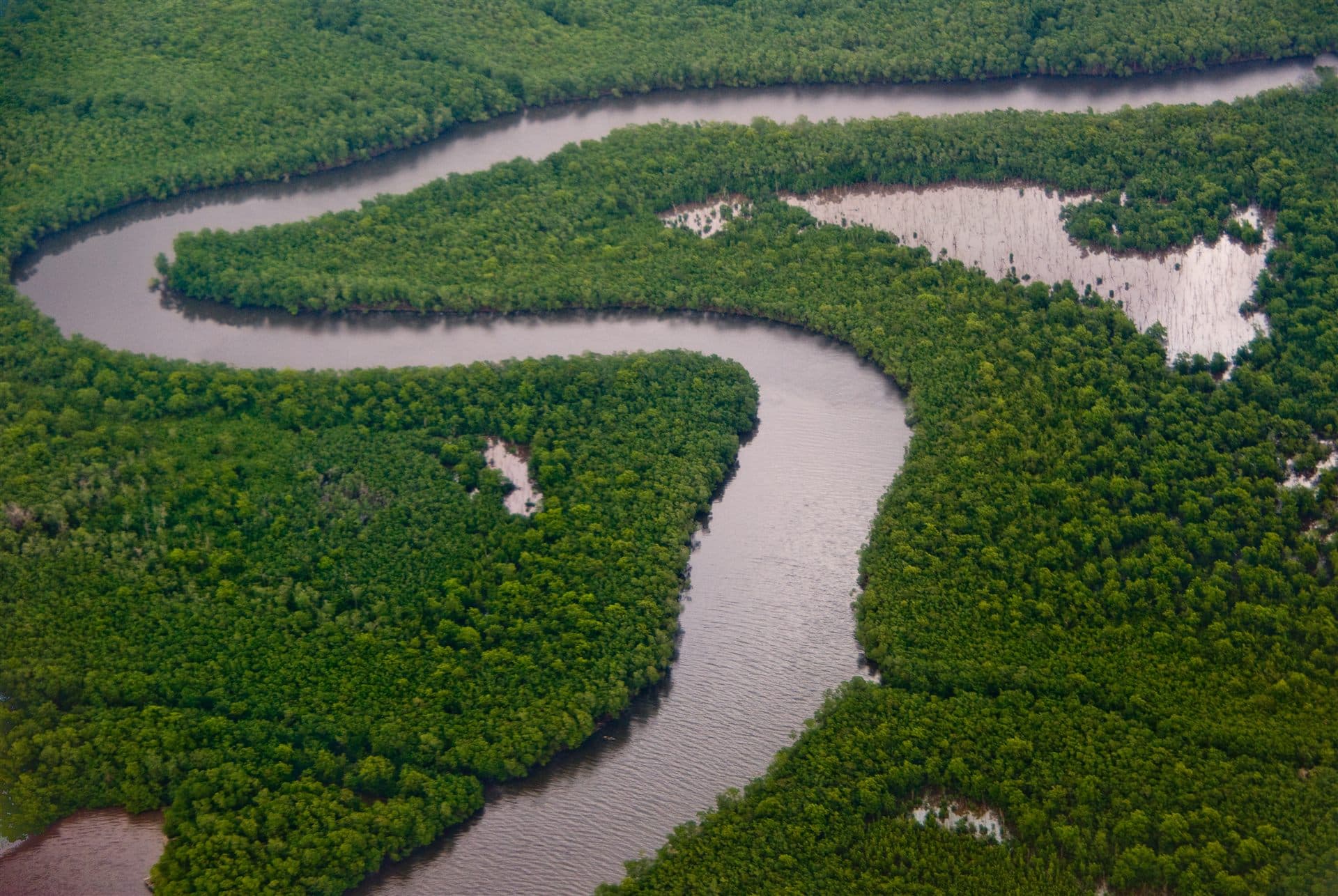
Photo: Bas Leenders · Caroni Swamp, Trinidad (CC BY-SA 2.0)
The Caroni Swamp Game Sanctuary is Trinidad's most celebrated protected wetland and the evening roost of tens of thousands of Scarlet Ibis - the national bird of Trinidad and Tobago. Stretching across approximately 4,856 hectares of tidal mangrove channels, mudflats, and lagoons on the western coast south of Port of Spain, Caroni is an internationally significant wetland, a Ramsar Site, and one of the Caribbean's premier wildlife spectacles.
The sanctuary's mangrove forest - dominated by red mangrove (Rhizophora mangle), black mangrove (Avicennia germinans), and white mangrove (Laguncularia racemosa) - forms a vast brackish estuary fed by the Caroni River and drained by tidal exchange with the Gulf of Paria. Every evening between roughly 17:30 and sunset, flocks of Scarlet Ibis numbering in the tens of thousands stream in from foraging grounds in Venezuela and the surrounding wetlands to roost communally in the mangrove canopy. The spectacle - crimson birds descending into green mangroves against a fading sky - is widely regarded as one of the natural wonders of the Caribbean. The sanctuary also supports herons, egrets, anhingas, and roseate spoonbills year-round, along with resident spectacled caimans (Caiman crocodilus) in its channels.
Beyond its iconic birdlife, Caroni functions as a nursery and feeding ground for a wide array of commercially important marine species. The sheltered channels and root systems of the mangroves provide refuge for juvenile shrimp, snapper, mullet, and dozens of other fish species, sustaining the livelihoods of artisanal fishing communities on the swamp's margins. The swamp's filtering capacity also intercepts nutrients and sediment before they reach the Gulf of Paria, providing services to water quality and to the coastal fishery that extend well beyond the sanctuary's legal boundary. Licensed boat tours operated by approved guides are permitted and form the backbone of Trinidad's nature-based tourism economy in the west.
Hunting of all wildlife is strictly prohibited year-round under the Conservation of Wildlife Act. Regulations also restrict how closely boats may approach roosting and nesting trees, and prohibit loud noise or other disturbances that would cause birds to flush from roost sites. Enforcement is coordinated by the Forestry Division of the Ministry of Agriculture, Land and Fisheries, which operates a ranger station at the sanctuary's main access point on the Uriah Butler Highway. Defined zones within the swamp are also declared prohibited areas under the Forests (Prohibited Areas) Order, providing an independent Forests Act enforcement layer on top of the COWA protections.
Why This Matters
The Caroni Swamp is one of the few places in the natural world where a single evening spectacle has sustained a conservation economy for nearly a century. Every evening, up to tens of thousands of Scarlet Ibis return to roost in the mangroves, transforming the canopy from green to crimson in what is routinely described as one of the most beautiful wildlife events in the Caribbean. That spectacle, and the boat tours that have conveyed visitors out to witness it since the 1930s, have built a culture of stewardship around this swamp that is genuinely rare in the region. The economic case for protection has always been visible, which is part of why the swamp has survived.
But the ecological case is equally compelling and often underappreciated. The Caroni Swamp's 4,856 hectares of mangrove, mudflat, and brackish lagoon form one of the most productive estuarine systems in the southern Caribbean. The mangrove channels serve as nursery habitat for juvenile shrimp, snapper, mullet, and dozens of other commercially important fish species; the artisanal fishing communities on the swamp's margins depend on that productivity directly. The mangroves also intercept nutrients and sediment from the Caroni River catchment before they reach the Gulf of Paria, filtering the agricultural and urban runoff of a significant portion of central Trinidad. The Ramsar designation is international recognition of a system that does ecological work at an enormous scale.
The Caroni Swamp and the Scarlet Ibis are among the most recognisable symbols of Trinidad and Tobago, and protecting them is, in a very real sense, protecting the country's natural identity. The threat of mangrove clearance for development, of unregulated boat traffic disturbing roosting birds, of agricultural runoff degrading water quality, are threats to something that is irreplaceable in both ecological and cultural terms. The Ramsar status, the Game Sanctuary designation, the Forests Act Prohibited Area layers: these frameworks exist because this place matters too much to lose.
Legal Protections
This sanctuary is gazetted under the Conservation of Wildlife Act. Hunting, trapping, and disturbance of wildlife within its boundaries is a criminal offence. Penalties include fines and imprisonment. If you witness illegal activity within this sanctuary, report it immediately.
Report a ViolationCurrent Threats
- Mangrove clearance for residential and industrial development
- Sedimentation and freshwater-flow alteration from land-use change in the Caroni River catchment
- Agricultural and urban runoff introducing nutrients, pesticides, and heavy metals
- Unregulated or unlicensed boat tours disturbing roosting and nesting birds
- Invasive predators - rats and mongoose - preying on ground-nesting birds
- Sea-level rise and increased storm-surge intensity
- Solid waste dumping at the swamp periphery
Primary Sources & Legal Citations
- Conservation of Wild Life Act, Chap. 67:01 · First Schedule, Item 9
- Forests (Prohibited Areas) Order, Chap. 66:01 · Subsections (2), (3), (4), (5), (6), (9)[GNs 156/1954, 145/1958, 136/1959, 122/1960, 129/1966, 141/1987]
- Ramsar Convention · Ramsar Site No. 1497[Listed 8 July 2005]
- BirdLife International Important Bird & Biodiversity Area · Caroni Swamp IBA[Designated for Scarlet Ibis roosting concentration]