Forests Act · Prohibited Area · Tobago
St. Giles Islands
Prohibited Area · Forests Act · Tobago
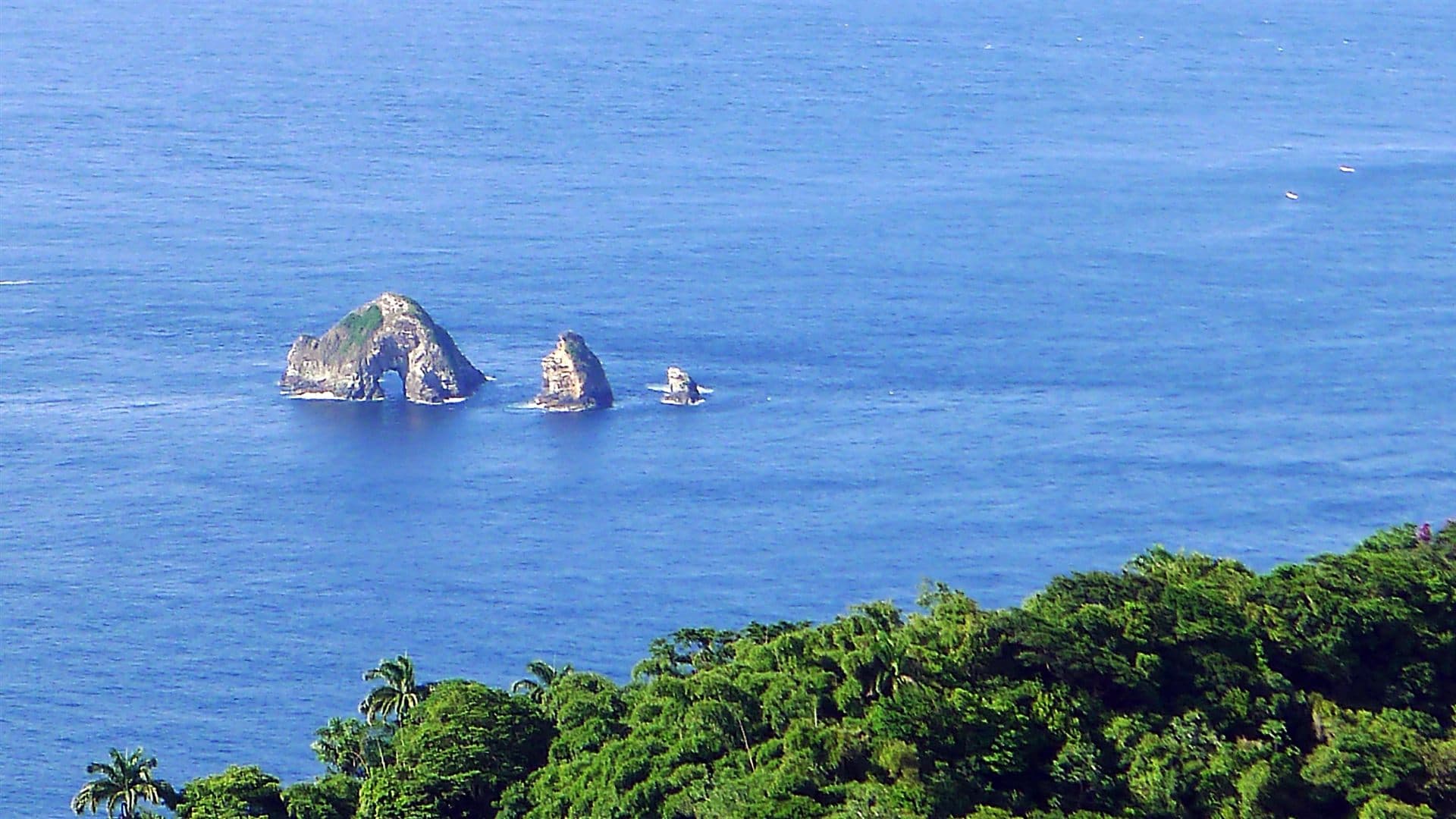
Photo: Kalamazadkhan · St. Giles Island, Tobago (CC BY-SA 4.0)
Perched at the northeastern tip of Tobago, the St. Giles Islands group - comprising the main Saint Giles Island (approximately 29 ha), Marble Island, London Bridge Rock, and a scatter of adjacent state islets - sits roughly one kilometre offshore near Charlotteville, precisely where the Atlantic Ocean meets the Caribbean Sea. Declared a Prohibited Area under the Forests (Prohibited Areas) Order, paragraph (7), GN 66/1968 (effective 9 April 1968), and re-listed in the Schedule to paragraph (14), GN 62/1999, these rocky outcrops hold the only breeding colonies of Magnificent Frigatebird and Red-footed Booby in all of Trinidad and Tobago, cementing their place as one of the most critically important seabird sanctuaries in the southern Caribbean.
The islands were private property of Charlotteville Estates for over a century before being deeded to the Government of Trinidad and Tobago in 1965, with the explicit condition that they be designated a wildlife sanctuary. That commitment is delivered through the Forests (Prohibited Areas) Order, paragraph (7), GN 66/1968, subsidiary legislation under the Forests Act, Chap. 66:01, which classifies the islands as a Prohibited Area and restricts entry year-round. The Order prohibits unauthorised landing, the taking of birds or eggs, fishing within the protected zone without a permit, and any activity likely to disturb nesting colonies. (The site is commonly referred to as the 'St. Giles Game Sanctuary' in popular and government usage; however St. Giles is not listed in the First Schedule of the Conservation of Wild Life Act, Chap. 67:01, and its statutory protection is under the Forests Act alone.)
Ecologically, St. Giles punches well above its size. The terrestrial habitat - a mosaic of cacti, low scrub, and wind-stunted deciduous trees reaching up to nine metres - is heavily enriched by nutrient inputs from dense seabird colonies, sustaining nesting populations of Magnificent Frigatebird, Red-footed Booby, Brown Booby, Masked Booby, Audubon's Shearwater, Brown Noddy, and Red-billed Tropicbird. Underwater, the islands mark a zone of powerful upwellings and current convergence that supports brain coral-dominated shallow reefs, soft coral walls, and a rich pelagic corridor used by hawksbill turtles, spotted eagle rays, nurse sharks, hammerheads, and large schools of jacks and tarpons. The rock arch known as London Bridge - twin volcanic spires forming a natural swim-through - is both a topographical landmark and a focal point of the marine ecosystem.
Despite strict legal protection, recent monitoring counts reveal seabird breeding populations significantly below historical levels, with poaching identified as the primary driver. A traditional practice of harvesting Brown Boobies and Magnificent Frigatebirds, particularly around harvest festivals, has persisted and reduced colony sizes over decades. Inadequate enforcement resources and the remote location of the islands compound the challenge. The broader threats mirror those facing island seabird colonies across the Caribbean: potential introduction of invasive predators, disturbance from unregulated boat traffic, and the long-term pressure of climate-driven shifts in prey availability at the Atlantic-Caribbean confluence.
Why This Matters
The St. Giles Islands sit at the extreme northeastern tip of Tobago, in the waters where the Caribbean Sea meets the Atlantic Ocean, and they host one of the most significant seabird colonies in the entire southern Caribbean. Magnificent frigatebirds, red-footed boobies, brown boobies, laughing gulls, and several tern species breed here in numbers that make the islands a nationally and regionally important breeding stronghold. The upwelling currents and high marine productivity of the surrounding waters create ideal foraging conditions for these colonial seabirds, whose nesting success is directly linked to the health of the marine food web beneath them.
The ecological role of seabird colonies is often underestimated relative to their dramatic visual presence. The guano produced by dense breeding colonies is a significant nutrient input into the surrounding marine environment, supporting phytoplankton and zooplankton productivity that cascades upward through the food web. The concentration of experienced foragers at a colony also constitutes collective knowledge: the movements of birds from a breeding colony provide real-time information about where fish are concentrated, information that artisanal fishers in the region have historically read and used. A healthy colony is a living indicator of marine ecosystem function.
Tobago's northeastern coast, from the St. Giles Islands through Speyside and Charlotteville, has been recognised as a UNESCO Man and the Biosphere Reserve, the first in Trinidad and Tobago, an acknowledgement that this corner of the island represents an exceptional integration of marine and terrestrial biodiversity with human communities that have long depended on and sustained it. The Forests Act Prohibited Area designation for the St. Giles Islands is the legal expression of a responsibility that extends far beyond the islands themselves.
Legal Protections
This area is declared a prohibited area under the Forests Act, Chap. 66:01, or under an Order made pursuant to that Act. Entry, clearing, hunting, and resource extraction within its boundaries without State authorisation is a criminal offence. Penalties include fines and imprisonment. If you witness illegal activity within this area, report it immediately.
Report a ViolationCurrent Threats
- Persistent poaching of boobies and frigatebirds, linked to harvest-festival tradition
- Limited enforcement capacity at remote location
- Invasive predator introduction risk via boat traffic
- Unregulated dive and boat tourism disturbing nesting colonies
- Climate-driven shifts in prey availability at the Atlantic-Caribbean confluence
Primary Sources & Legal Citations
- Forests (Prohibited Areas) Order, Chap. 66:01 · paragraph (7)[GN 66/1968 (effective 9 April 1968), primary instrument declaring St. Giles a Prohibited Area]
- Forests (Prohibited Areas) Order, Chap. 66:01 · Schedule to paragraph (14)[GN 62/1999, listing reference]
- UNESCO Man and the Biosphere Programme · North-East Tobago Biosphere Reserve[Designated October 2020; inaugurated June 2022]
- BirdLife International Important Bird & Biodiversity Area · St. Giles Islands IBA[Approx. 1,000 ha (includes marine zone); only T&T breeding site for Magnificent Frigatebird and Red-footed Booby]